A garden that fails quietly is worse than one that fails obviously — because you don’t find out until harvest time, when it’s too late to fix.
A productive survival garden isn’t simply about planting as many vegetables as possible. The goal is to create a reliable system that provides calories, nutrition, repeated harvests, and food that can actually be stored.
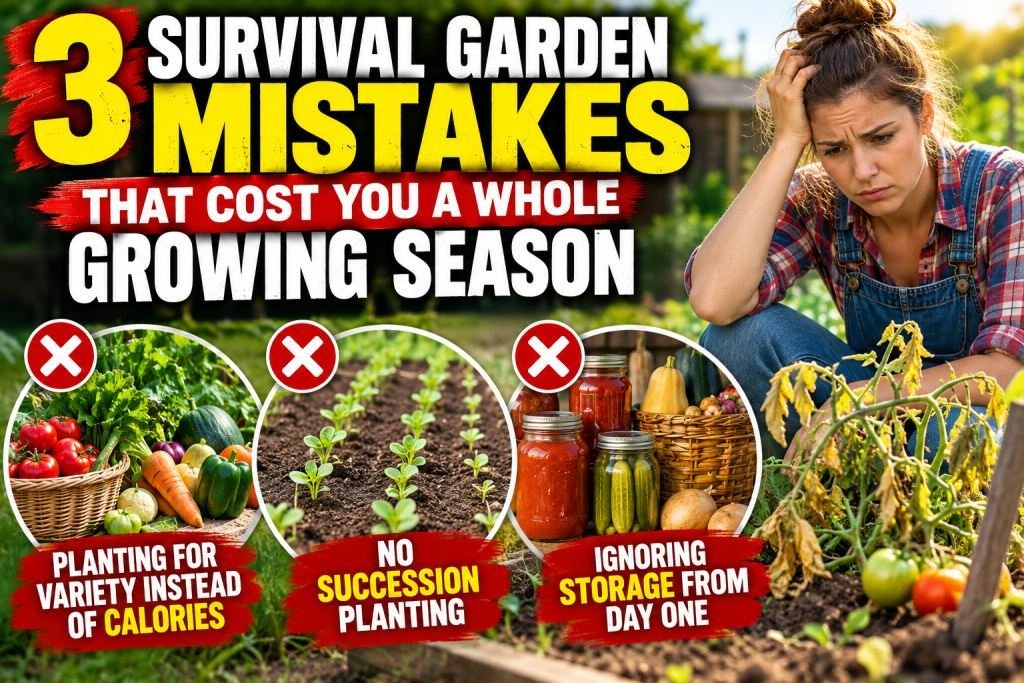
Here are three common mistakes that can undermine an entire growing season — and what to do instead.
1. Planting for Variety Instead of Calories
A garden filled with lettuce, herbs, tomatoes, and other vegetables can look incredibly productive. But visual abundance doesn’t necessarily translate into enough food.
If your goal is greater food security, reserve some garden space for crops that provide substantial calories and can be stored. Potatoes, sweet potatoes, dry beans, winter squash, and certain grains can play a larger role in a food-focused garden than crops that are mainly harvested fresh.


A simple approach is to divide your growing space into three categories:
- Staple crops: potatoes, sweet potatoes, dry beans, winter squash
- Nutrition crops: leafy greens, carrots, onions, cabbage
- Flavor crops: tomatoes, herbs, peppers and other favorites
You don’t have to eliminate the vegetables your family enjoys. Instead, make sure the garden isn’t using all of its valuable space for crops that provide little stored food.
The lesson: Grow for what your household will actually eat and use — not just what looks impressive in the garden.
2. Planting Everything at Once
One of the easiest mistakes to make is planting the entire garden during one busy weekend.
It feels efficient, but it can create a frustrating pattern: nothing to harvest, followed by too much food arriving at once, followed by another empty period.
That’s where succession planting becomes useful.
Instead of planting all of a quick-growing crop at once, stagger some plantings. For example, you might plant a small batch of beans or greens, wait a week or two, and plant another batch. When the first crop finishes, the next one can be approaching harvest.


You can also use the space again after harvesting an early crop. Once radishes, lettuce, or another short-season vegetable comes out, the same bed can potentially be replanted with another suitable crop.
A basic succession schedule might look like:
Plant → Harvest → Clear the bed → Replant → Harvest again
This turns one garden bed into a continuously productive piece of land rather than a one-time planting area.
The lesson: Don’t think only about what you’re planting. Think about when each section of the garden will produce food.
3. Ignoring Storage From Day One
Imagine harvesting 30 pounds of vegetables in one week.
Sounds great — until you realize you have nowhere to put them.
Fresh produce doesn’t automatically become long-term food. Some crops need curing, drying, freezing, fermenting, canning, or appropriate cool storage to remain useful after harvest.
Potatoes, for example, need suitable storage conditions, while dry beans can be stored for much longer once properly dried. Winter squash can also provide a useful storage crop when harvested and handled correctly.


Before planting, ask:
“What am I going to do with this harvest?”
For different crops, your answer might be:
- Potatoes: cool, dark storage
- Dry beans: thoroughly dry and store in airtight containers
- Winter squash: cure and store in an appropriate dry location
- Leafy greens: eat fresh, freeze, or preserve
- Tomatoes: use fresh, freeze, dry, or turn into sauces
- Herbs: dry or freeze for later use
Even a simple storage shelf, freezer space, dehydrator, or collection of suitable food-storage containers can make a major difference.
Build the Garden Around the Whole Season
The biggest mistake is thinking of a survival garden as simply a collection of plants.
It’s actually a system.
You need crops that produce useful food, a planting schedule that keeps something coming in, and a storage plan that prevents your harvest from becoming waste.
Before planting, make three lists:
1. What will provide calories?
2. What will provide continuous harvests?
3. How will I store each crop?
Answer those three questions first, and your garden plan becomes much more practical.
A structured plan — such as the Backyard Miracle Farm System — can help organize these elements into a planned growing system rather than leaving each decision until planting time.
A successful food garden isn’t measured by how full it looks in July. It’s measured by how much useful food you can harvest, preserve, and still have available later.