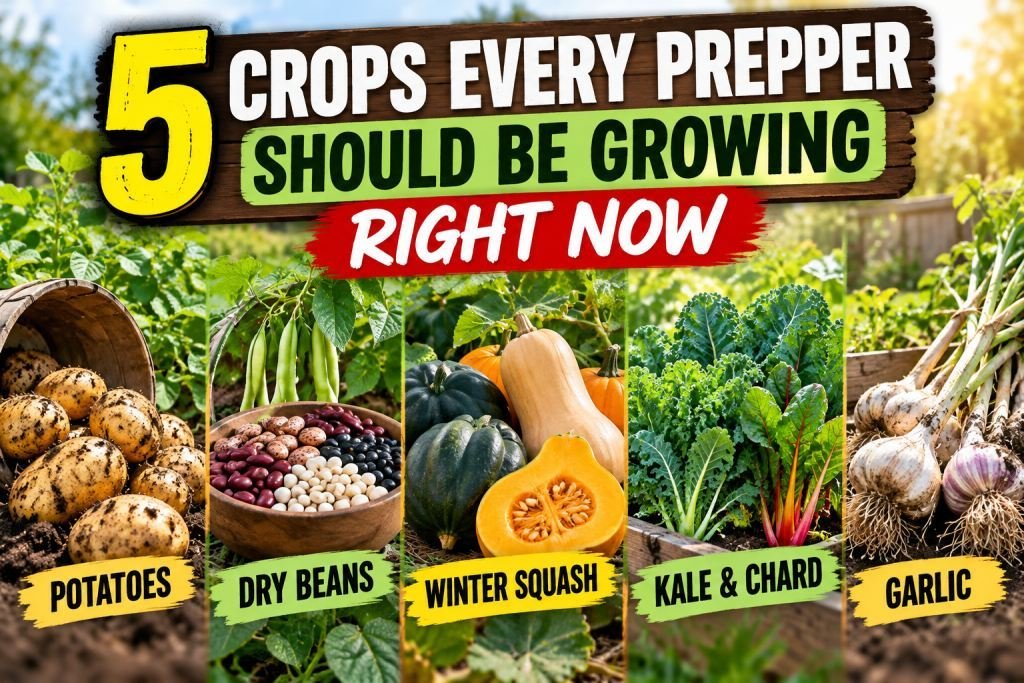
5 Crops Every Prepper Should Be Growing Right Now

Most “survival garden” advice tells you to grow everything. That’s how people end up with a yard full of struggling plants and nothing to actually eat. If food security is the goal, a handful of crops do most of the work.

1. Potatoes

https://images.openai.com/static-rsc-4/8HUpmzNFRu-nNLHBdf5lu23EdU-Kugwupb9TqyjrIvmxgr3xb5FbcQu0RvoTc8gDW9Sv3HlyJRVfwLy6hdhbIdWsP30izDfn1wSe4je8A9jpqbTLlpho8EzhqoMk6ToOz3zEX8zCRK0FcV9xDYjZ-2NCzQ5uzptqUSP0vxtY5RZ10OxX_s-ksZETEQGZnLF8?purpose=fullsize
https://images.openai.com/static-rsc-4/R3sE-76Zpcsbxdjtj6Aw5AsYjfm8F5ZYOdSt1uZ71eZAKtj7V-mdoVJB_qBOaDskQp6C4fk5iQzwP4M7NgFfvCL5G-CzrmMK7F6dQqDvoWHhRJKcyJ6Zei_E8Q3XF3NjynDEx9qCf1cCMQeu6Qa-RcaQj_9LQi4Hj2k8KOSyIWDzzENFXidwETOkIVfdKYql?purpose=fullsize
https://images.openai.com/static-rsc-4/BQ3-sSJi2IYE7516wyQEd91632SrPr0YN_3cjjTf61gzO9T52AI-Yer7zjqKhxNytlyB11QPe7PwuVb22y-VXCYhopJXssc28m7MBPFj8Exg9emPO9yoQMyJm-KLdw16PffMcGlACi0KiDk9z0PMGuvdtOlZ5fbw9G-SP9tnqXuPcZgWCcQsQI5wW4ZcUJvw?purpose=fullsize

Potatoes are one of the most practical crops for a food-focused garden. They provide carbohydrates and calories while making good use of relatively limited garden space. They can also be grown in containers, grow bags, raised beds, or directly in the ground.

Once harvested and properly cured, potatoes can be stored for months in a cool, dark, well-ventilated location. For a prepper-style garden, that combination of calories, versatility, and storage potential makes potatoes particularly useful.

2. Dry Beans

https://images.openai.com/static-rsc-4/We4UROkf9TYsbz0-0dXuLYSPRyhuJRAjZzPSVvqCPA8TQGra3tgUk_1ujHSTCZQmjuun3F_aQOd2ggtipjT-403pKsxenT-UWKye6qTuuB2TJmKE74zr4blHNTRbskvPhhce_N3dAP6FrzYHOi0Z1__8JEIy3T2VXIG5u21whf18BqfxlepEJQlv1XayhAnY?purpose=fullsize
https://images.openai.com/static-rsc-4/2l_l-lktJXxnRy8SKcmvclj1FP1EveGBB7wgLRNpsT697Qnh1mh8VLG1x58UVPWa66diYhYb-_8o2z5gKbxxZviO3Ey2TCbkwr2kW6HqNmoMYAEPTp8QytBP1AhFihjehSoi_y9e4sH6aamcNPe8xyhQj_5sQYoo2BO9tw0qZ7wrJfNykyIZRuaG2Cy9t9oT?purpose=fullsize
https://images.openai.com/static-rsc-4/sMb7Kz29Yv9rBI3NXg26NOVrPTLN3e6_Gy9YjaAKURLAs_AU9S9QPQSkNE-8c5cQpcEhCw0Ya9rg6JXq557UGO04AQyRe1ZxIrLJh25uSvijQRkFsKcTyF_QzgpKEzAWk4_S1nX2eKi5wUxiwmdo4wEseaDfEhd7QlRHOdT5l5IvOiq2WqZpCmw6vQuP1ROS?purpose=fullsize

Dry beans offer something potatoes don’t: a useful source of plant-based protein. Varieties such as kidney beans, pinto beans, black beans, and navy beans can be grown specifically for dry storage.

Allow the pods to mature and dry on the plant before harvesting. Once completely dry, the beans can be cleaned and stored in airtight containers. Properly dried beans can remain useful for a long time, making them an excellent addition to a long-term pantry.

3. Winter Squash

https://images.openai.com/static-rsc-4/5Mcm3DdkMkAhSOMzwyo7ny18d_HeDt7DqT6qUI4t33TJ49R12yQfxvAOxc-CfJOFiYu2mCkm2DmwYLj8RVsC2wMCT7TtIhg07rdtzuSfJ4BhxcGOSIaSJMEMWnSHMQyWwm9R8moFeHjnLCJLqWnkxxr_VbZRpqoUjjDrZpu1buGlAiCpQhPTy0sJypF2J6EA?purpose=fullsize
https://images.openai.com/static-rsc-4/D3IJYwpgRQagWXHAaaBaceQ-cGPlel-4Pkprgvh1vTj_8UOz08rKeiOTJrHtbZ-q1DyUM4c82a5Tt0T0qTVyiPzcJLlI26zsExaD6VXT73Hk0OxXn5Jsf02xhF-aZUirFs-OCcz98RySO0C-mMh8yDj3nSmUtkaRLl8F5uesnxMsOYvB05Lgs4-xYLKGgmU1?purpose=fullsize
https://images.openai.com/static-rsc-4/svZbiqwhxZPCM2jrYOPFeAK3HZ5Yjnb8ERmxdQRvo91elWyyY0jQpGqrEgIktx4XebJbWIrQyfpWLK_5P9oLCUkyB6HI4WO2-ICA3YgdmsAZ4piUmZcLTDMDATqbE8fAnrf8bAXqiTfAwlAkfAVioIhX8shPznfar46OjLxeDDBEOhmDiUYCmnOLG2etg9Jn?purpose=fullsize

Winter squash is another valuable storage crop. Butternut, acorn, and similar varieties produce substantial fruits from a relatively small number of plants.

Unlike delicate summer vegetables, mature winter squash has a naturally protective skin. After curing, many varieties can remain edible for several months when stored somewhere cool, dry, and well ventilated.

The vines do require room, so consider growing them vertically where practical or directing them along the edge of a garden.

4. Kale and Chard

https://images.openai.com/static-rsc-4/NM8f130Mk4TTQa9YcpBP6dCaCf6NPSIikd5mQzWNylC0QJ63ElQWzeOZImCIR0MnIQGdhlMK8WIHPula1CVHESfiddpQT9gCm6N_Ij4gxO7q-1UU7oqfcY5j0kniVoXBcNj5obD_jMxXlJwjYIv66Q_rlRdCpUu1I_7ESaHEFWPkicT8BsaSRuel0uwWRTOk?purpose=fullsize
https://images.openai.com/static-rsc-4/U14mVcVeRXSGEjqTBJQ6uZSF1yLSqqAUV1eYvaBy9hNsynWhG_9sFCNdpkCm3Cd8EoKFVq-isjxAt5ZJGOtIkqZyjuc7HGAI9eZAL6oT3154An_QCqiT5vU8SBr0eOAUO_JThK3eOUFmJeMb85pBs1ObGmkKmTmZWMfSa7OvOZSyr3lNT7ufZ56NQ7hQ60vC?purpose=fullsize
https://images.openai.com/static-rsc-4/JKZ1j9FmYwo_GhzgsI-TSenFIE36J7-lLqSRpZ8jCZO9lRiS-g2G1v5KkzmA0HxGaB-oedJGGbRdG3iMDcZHRhSG9TxlM4dmNLetClpceQp8HWzclj-HIkaMYUIu0LSc3OtHoEu9RYQOzQJ1F9kCgN1ZLfYKpPWRYSgsjUgeoFuQ9HiH3i29yfW1n2P0fdzQ?purpose=fullsize

Kale and chard aren’t major calorie crops, but they solve a different problem: producing fresh greens over an extended period.

Instead of harvesting the entire plant, pick the outer leaves and allow the center to continue growing. This “cut-and-come-again” approach can provide repeated harvests from the same plants.

Depending on your climate, these greens can continue producing through cool weather and light frost. They’re especially useful for adding fresh vegetables to meals based around stored potatoes, beans, grains, and squash.

5. Garlic

https://images.openai.com/static-rsc-4/3cVtFBmvF_5870bCFwNQUoEsKNSZr_-vY22vFD0DpBAJdizSX2yNmI6RhuDKUH6HwSoaTqub6bWit0L3yWD1Qe_0zUPJcXxXk_XScFFpknFpU4XG6BhC59dJs4QlttkONihgFJMEcJs6h5j2gvGGzqQ0_TZ6wVBuhdnYCIljvsaF0H1RydJHzNDxJPP71_h6?purpose=fullsize
https://images.openai.com/static-rsc-4/UPK0UcuaThgo78Rd-Iss3vQ7o2vAj5ADSc5SqGnEz74FqBak0wE7DUt2uPN5qS2a7XN2c2I1p6uRrzXiXitza8ym3_nbQcmC9IxruJg7UplHiyw5PI0nAe4OCsAEzv98h6eF9Rp38p1UiAAMhjWTNkWsDLBbQdMLN9YHoruKVfte0WFrioYbp5TJdsd92G-c?purpose=fullsize
https://images.openai.com/static-rsc-4/WKy3BkCATMleetXQpUc2qZEXWbThBqDvoilfT6UfNKIGymcaaMR9rOxoGUABj7Ucnov9kdYikxP-8eBsyR33uRGvdoJfFq0ZB8vO7HxFhFb4ioYC7Z_wBSloYAB6dSnFp2SMKWi189jEGlgpUDtLgzc14yw7GON88JrEODg0NWFoe5puA9uSFEsnd6BVoXNi?purpose=fullsize

Garlic takes little effort compared with many garden crops. In many climates, cloves are planted in autumn and harvested the following summer.

After harvesting, garlic should be properly cured before storage. A successful crop can provide bulbs for cooking for many months, while some of the largest healthy cloves can be saved for the next planting season.

That makes garlic useful not only as food, but also as a crop that can help you maintain your own planting supply.

Build a Garden Around Food, Not Just Variety

A productive food garden isn’t necessarily the one with the most different vegetables. The goal is to balance calories, protein, storage life, growing space, and repeated harvests.

Potatoes provide calories. Dry beans contribute protein. Winter squash offers another storage-friendly food. Kale and chard provide fresh greens, while garlic adds flavor and long-term usefulness.

Notice what’s missing: no corn, no watermelon, and none of the space-hungry crops that look great on Pinterest but may contribute relatively little to a small household food supply. This is a calories-and-shelf-life list, not a pretty-garden list.

Picking the right five crops is half the battle — the other half is knowing how to lay them out so they don’t compete unnecessarily for space or nutrients. That’s exactly what the Backyard Miracle Farm System walks you through, plot by plot.
Leave a Comment