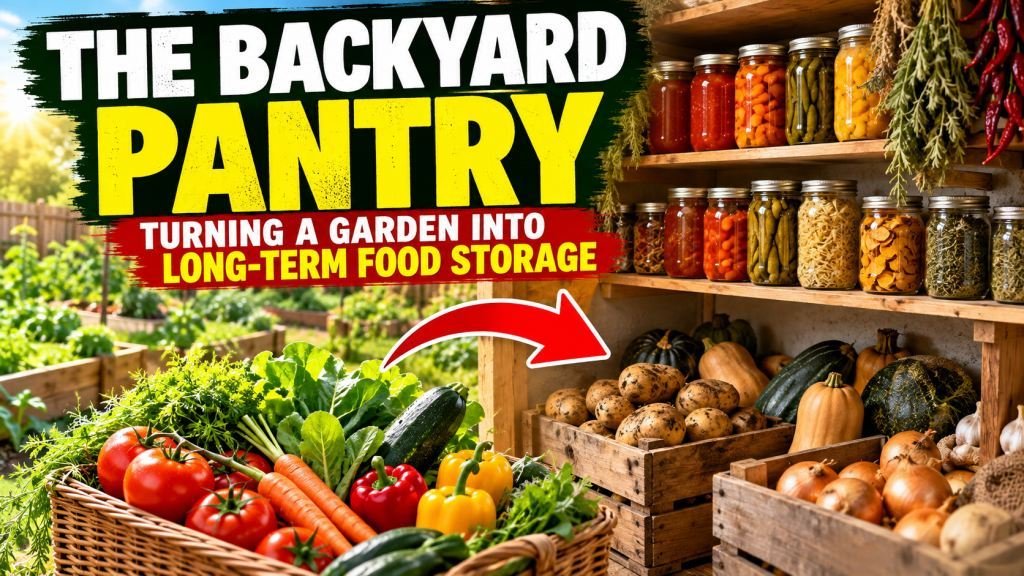
Growing the food is only step one. A garden that isn’t paired with a storage plan turns into a summer of tomatoes, zucchini, beans, and squash—and an empty pantry by December.
The real advantage of a productive backyard garden comes when you can extend the harvest beyond the growing season. With a few simple preservation and storage methods, vegetables harvested in summer can continue feeding your household for months.


1. Root Cellaring: Let the Earth Do the Work
Root cellaring is one of the simplest ways to store certain crops without processing them. You don’t necessarily need a traditional underground cellar. A cool basement, unheated storage area, or another suitable space can sometimes provide the conditions needed for storage.
Potatoes, carrots, beets, turnips, cabbage, and winter squash are among the crops commonly suited to long-term storage. The important thing is matching the crop to the right temperature and humidity. Root vegetables generally prefer cool, humid conditions, while onions and winter squash prefer cooler, drier conditions. (University of Alaska Fairbanks)
Before storing anything, inspect the harvest carefully. Damaged, bruised, or diseased vegetables can spoil faster and potentially affect nearby produce. Check stored crops regularly and remove anything showing significant rot.


2. Dehydrating: Turn a Huge Harvest Into a Small Package
Dehydrating is especially useful when your garden produces more herbs, greens, peppers, or vegetables than you can eat fresh.
Removing moisture makes food much easier to store because the finished product takes up dramatically less space. Herbs can be dried and stored in jars, while vegetables can be dried for use in soups, stews, sauces, and other meals.
A dehydrator makes the process easier and more consistent, but the basic principle is simple: prepare the produce appropriately, dry it thoroughly, allow it to cool, and store it in an airtight container in a cool, dry, dark location.


3. Freezing: The Easy Option
If you’re looking for the lowest-effort preservation method, freezing is hard to beat.
Beans, chopped vegetables, greens, herbs, and prepared meals can all become useful freezer inventory. Instead of freezing one giant container, divide food into meal-sized portions. Label each package with the contents and date so older food gets used first.
The biggest limitation is that freezing depends on electricity, so it works best as one part of a larger storage strategy, rather than your only preservation method.
4. Simple Canning for Shelf-Stable Food
Canning can turn a seasonal harvest into jars that sit on the pantry shelf for months.
Tomatoes and other appropriately acidic foods are common beginner projects. However, food safety matters: use tested recipes and proper processing methods rather than improvising processing times or acidity levels.


5. Build a Storage System, Not Just a Pile of Food
The biggest improvement you can make is to organize your harvest before you need it.
Create separate areas for:
- Fresh storage: potatoes, carrots, onions, squash
- Dry storage: dehydrated herbs and vegetables
- Freezer storage: beans, greens, prepared meals
- Pantry storage: canned foods and other shelf-stable products
Label everything with the food name and preservation date. Keep newer items behind older ones and regularly inspect stored food.
This turns your garden into more than a source of fresh summer vegetables. It becomes a system that keeps producing value long after the plants are finished.
The Goal: Make One Growing Season Last
You don’t need a massive homestead or a basement packed with hundreds of jars.
Start with the crops you already grow. Store potatoes and squash. Dry your excess herbs. Freeze surplus beans. Learn to safely can tomatoes. Then expand your system each season.
The goal isn’t a fully stocked bunker—it’s turning one growing season into food that lasts well past it.
If the growing side still feels like the harder part to figure out, the Backyard Miracle Farm System is built to get you a harvest worth storing in the first place.