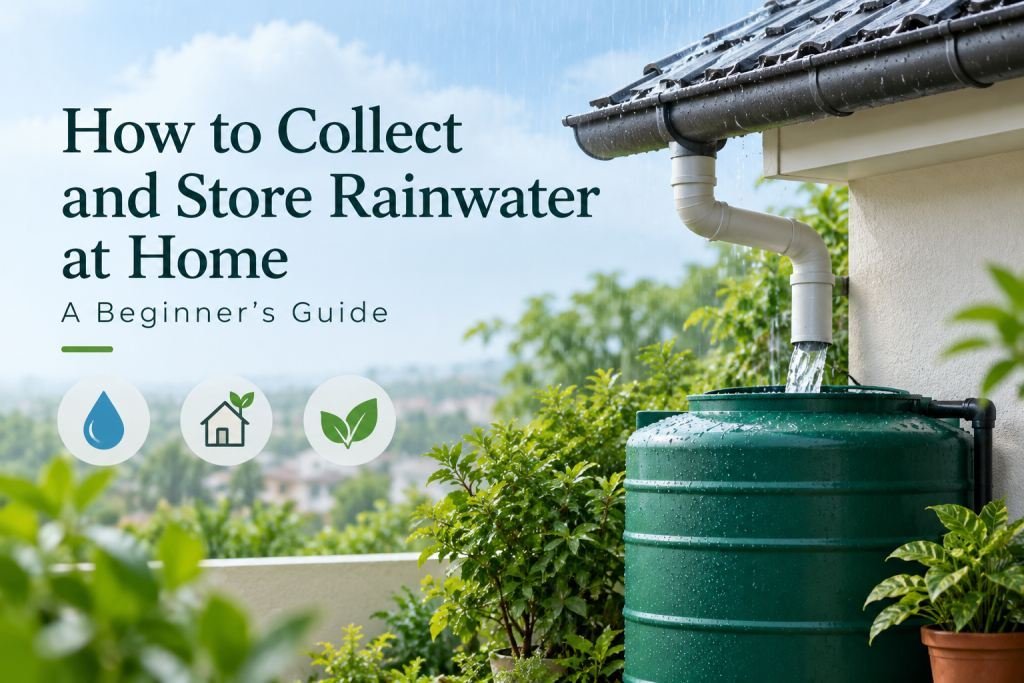
Rainwater harvesting is one of the simplest ways to make better use of the water that naturally falls on your home. Instead of allowing rainwater to run into drains, you can collect it from your roof, filter it, and store it for suitable household uses.
Whether you live in a house, apartment, or small property, a basic rainwater harvesting system can help reduce dependence on municipal water and groundwater while making better use of rainfall.


What Is Rainwater Harvesting?
Rainwater harvesting is the process of collecting rain from surfaces such as rooftops and directing it into a storage tank, barrel, or underground reservoir.
A basic system usually has five parts:
- Roof – collects rainfall.
- Gutters – carry water from the roof.
- Downpipes – direct water toward the storage system.
- Filter – removes leaves, dirt, and other debris.
- Storage tank – stores the collected water.
The system can be simple or sophisticated depending on your available space, budget, and intended use.
Step 1: Choose a Suitable Collection Area
Your roof is usually the easiest place to collect rainwater because it provides a relatively large surface area.
Before installing a system, check the roof condition and make sure it is reasonably clean. Avoid collecting water from surfaces contaminated with chemicals, excessive bird droppings, or other pollutants.
The amount of water you can collect depends mainly on your roof area and rainfall.
A simple estimate is:
Rainwater collected ≈ Roof area × Rainfall × Runoff efficiency
For example, a 100-square-meter roof receiving 20 mm of rain could theoretically receive around 2,000 litres of water before accounting for collection losses.
Step 2: Install Gutters and Downpipes
Gutters collect water flowing from the roof and guide it toward one or more downpipes.
Make sure gutters have a slight slope so that water flows properly instead of remaining stagnant. Install a mesh screen or leaf guard where appropriate to prevent leaves and larger debris from entering the system.


6
Step 3: Add a First-Flush System
The first rain after a dry period can wash dust, leaves, bird droppings, and other contaminants from the roof.
A first-flush diverter allows this initial water to be diverted away from the main storage tank. After the initial flow has passed, cleaner rainwater can enter the tank.
This is an important part of a home rainwater harvesting system, particularly in areas with dusty conditions or long periods between rainfall.
Step 4: Filter the Rainwater
Before water enters your storage tank, use an appropriate filtration system.
A basic filter may include a mesh screen to remove leaves and larger particles. More advanced systems can use multiple filtration stages.
The level of filtration should depend on how you plan to use the water. Water intended for drinking requires substantially more treatment than water intended for gardening or cleaning.
Important: Simply collecting and filtering rooftop rainwater does not automatically make it safe to drink. Potable use requires appropriate treatment and testing.
Step 5: Select the Right Storage Tank
Rainwater can be stored in plastic, concrete, metal, or other suitable tanks designed for water storage.
Choose a tank based on your available space and expected rainfall. Keep the tank covered to reduce contamination, mosquito breeding, algae growth, and evaporation.


A tank should also have an overflow outlet. During heavy rainfall, excess water can be directed toward a garden, recharge pit, or suitable drainage area.
What Can You Use Collected Rainwater For?
Depending on the quality and treatment of the water, collected rainwater can be useful for several non-drinking purposes.
| Use | Suitable? |
|---|---|
| Watering plants | Yes |
| Gardening | Yes |
| Outdoor cleaning | Yes |
| Toilet flushing | Yes |
| Washing certain outdoor areas | Yes |
| Drinking | Requires proper treatment and testing |
Using harvested rainwater for suitable non-potable purposes can reduce the amount of treated municipal water used for everyday activities.
How to Maintain Your System
A rainwater harvesting system needs regular maintenance. Clean the roof and gutters periodically, remove leaves from screens, inspect filters, and check the storage tank.
Before and during the rainy season, inspect pipes and connections for leaks or blockages. The storage tank should remain covered and reasonably clean.
Is Rainwater Harvesting Worth It?
For many homes, rainwater harvesting can be a practical way to make use of rainfall that would otherwise flow away. The system does not need to be complicated. Even a small rain barrel connected to a suitable downpipe can be a starting point.
For larger properties, a properly designed system can combine rooftop collection, filtration, storage, and groundwater recharge.
The key is to design the system around local rainfall, roof size, available space, and intended water use. With regular maintenance and appropriate treatment, rainwater harvesting can become a useful part of a more water-conscious home.