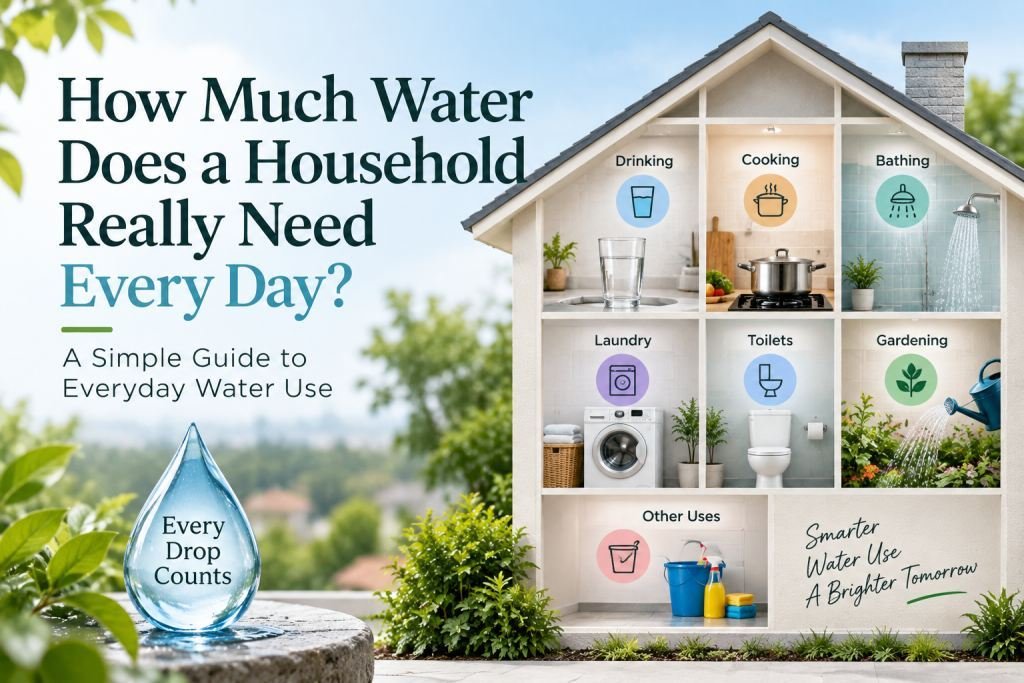
Water is one of the most important resources in any home, but it can be surprisingly difficult to estimate how much water a household actually uses each day. Drinking water is only a small part of the total. Bathing, toilets, laundry, cooking, cleaning, gardening, and other everyday activities can account for most household water consumption.
Understanding where water goes can help you identify opportunities to reduce waste without making everyday life inconvenient.


6
How Much Water Does a Household Need?
There is no single number that applies to every household. Water needs depend on the number of people, climate, lifestyle, appliances, garden size, and local water availability.
For a simple example, consider a four-person household. Depending on habits and equipment, daily household consumption could range from roughly 400 to 800 litres or more, particularly when outdoor water use is included.
The important point is that total consumption is made up of many small and large uses throughout the day.
Here is an illustrative breakdown:
| Household Activity | Approximate Daily Share |
|---|---|
| Drinking | 8–12 L |
| Cooking & food preparation | 15–30 L |
| Bathing | 120–250 L |
| Toilets | 100–200 L |
| Laundry | 60–150 L |
| Dishwashing | 30–60 L |
| Cleaning | 20–50 L |
| Gardening | 20–150+ L |
| Other uses | 20–50 L |
These are illustrative ranges rather than universal requirements. Actual consumption varies significantly between households.
1. Drinking Water
Drinking is essential, but it represents a relatively small percentage of household water consumption.
An adult’s water requirement varies depending on factors such as temperature, physical activity, diet, and overall health. Water also comes from foods and other beverages.
For a household of four, the amount of water actually consumed as drinking water may therefore be only several litres per day.
This is why reducing household consumption usually involves looking beyond the kitchen drinking bottle.
2. Cooking and Food Preparation
Cooking requires water for activities such as boiling food, washing vegetables, preparing rice, making beverages, and cleaning ingredients.
The amount can vary considerably depending on cooking habits. Preparing meals from fresh ingredients may require more water for washing and preparation than using ready-to-eat foods.
Using a bowl or container instead of leaving the tap running can help reduce unnecessary water use.


6
3. Bathing and Showers
Bathing can be one of the largest indoor uses of water.
A long shower can use considerably more water than a shorter shower, especially when the showerhead has a high flow rate. Traditional bucket bathing can also have a different consumption pattern depending on how much water is used.
Small changes can make a noticeable difference:
- Take shorter showers.
- Turn off the water while applying soap or shampoo.
- Repair dripping taps and shower fittings.
- Consider water-efficient showerheads where appropriate.
- Avoid unnecessarily running water while preparing for a bath.
4. Toilets
Toilets are another major source of household water consumption.
Every flush uses water, and the total can become significant when multiple people use the toilet several times throughout the day.
Modern dual-flush or low-flow toilets can reduce water consumption compared with older, high-volume designs. However, even with an efficient toilet, a household can save water by fixing leaks promptly.
A continuously running toilet can waste a surprising amount of water over time.
5. Laundry
Washing clothes can consume a significant amount of water, particularly with older washing machines or frequent small loads.
A household can reduce laundry-related water use by:
- Running full loads when practical.
- Selecting an appropriate water-saving cycle.
- Avoiding unnecessary washing.
- Using a modern efficient washing machine when replacing an old one.
- Checking hoses and connections for leaks.


5
The actual amount of water used per load depends heavily on the washing machine model and selected cycle.
6. Dishwashing
Dishwashing can consume anywhere from a modest amount to a substantial quantity of water depending on the method.
Leaving a tap running continuously while washing dishes can use more water than necessary. A dishwasher, when used efficiently and fully loaded, can sometimes use less water than handwashing, although performance varies by appliance and washing habits.
Scraping food from plates before washing also helps reduce the need for excessive rinsing.
7. Cleaning the Home
Water used for mopping floors, cleaning bathrooms, washing windows, and other household cleaning tasks adds to daily consumption.
Instead of repeatedly changing large quantities of water, use only what is necessary for the particular cleaning job.
For many tasks, a damp microfiber cloth or controlled spray can replace continuously running water.
8. Gardening and Outdoor Water Use
Outdoor water use can dramatically change a household’s total consumption.
A small garden may require relatively little water, while lawns, large gardens, potted plants, and outdoor cleaning can consume hundreds of litres during hot weather.


7
Consider these water-saving techniques:
- Water plants early in the morning or later in the evening.
- Use drip irrigation where appropriate.
- Apply mulch around plants to reduce evaporation.
- Choose plants suited to the local climate.
- Collect rainwater for suitable gardening uses.
- Avoid overwatering.
Rainwater harvesting can be particularly useful for outdoor applications when local conditions and regulations permit.
Where Does Most Household Water Go?
One useful lesson is that drinking water is not the main driver of household consumption.
For many homes, bathing, toilet flushing, laundry, and outdoor activities account for much more water than drinking and cooking combined.
This means that focusing only on drinking water misses several major opportunities for conservation.
How to Estimate Your Household’s Water Use
The easiest way to understand your own consumption is to look at your water meter, if you have one.
Record the meter reading at the same time each day for several days. Then compare the readings to determine approximately how many litres your household uses.
You can also divide your total daily consumption by the number of people in the household.
For example:
Daily household use ÷ number of residents = approximate litres per person per day
Tracking your consumption for a week can reveal patterns that are difficult to notice otherwise.
How to Reduce Water Use Without Major Lifestyle Changes
You don’t necessarily need to make dramatic changes. Start with the biggest sources of consumption.
Fix leaks, shorten showers, use efficient toilet flushes, run full laundry loads, avoid leaving taps running, and improve garden watering.
Another useful strategy is to reuse suitable water where safe and practical—for example, certain household greywater applications or collected rainwater for gardening, subject to local rules and appropriate treatment.
The Bigger Picture
A household’s water requirement is much more than the water people drink. Every shower, flush, laundry cycle, meal, dishwashing session, and garden contributes to the total.
Understanding these different categories makes water conservation much easier because you can focus on activities that have the greatest impact.
The goal isn’t necessarily to use as little water as possible. It’s to use the right amount for each purpose and avoid wasting water that could otherwise be saved for future needs.
For households looking to become more sustainable, measuring daily consumption is a simple first step. Once you know where your water goes, even small changes can add up to meaningful savings over time.