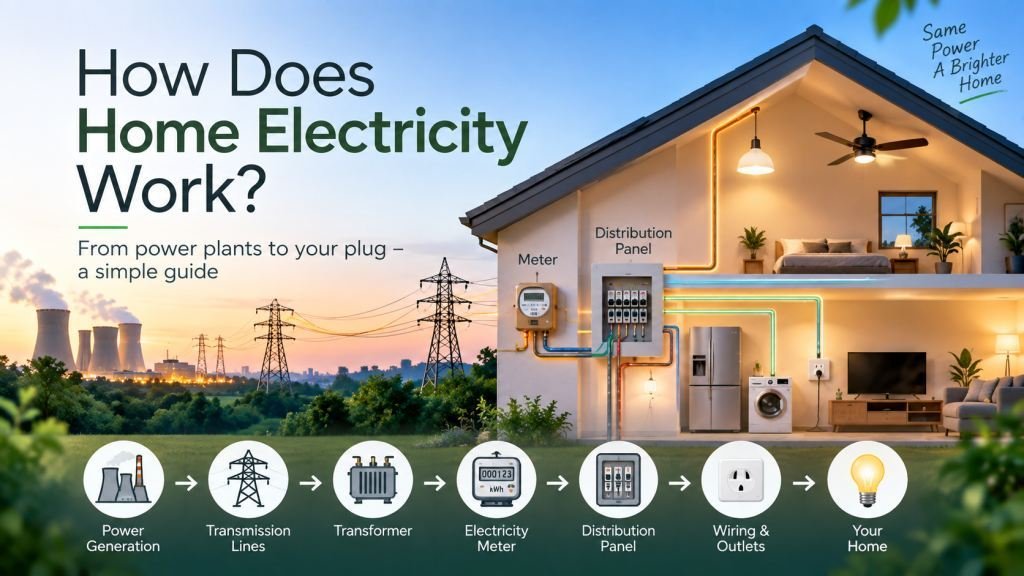
Many homes use more electricity than necessary without realizing it. Small habits, inefficient appliances, and unnecessary energy consumption can increase monthly electricity bills. Here are 5 common ways homes waste electricity and what you can do about them.
1. Leaving Lights and Fans On
Lights and fans are often left running in empty rooms. While a single light may not use much electricity, unnecessary usage across multiple rooms can add up over time.
Simple fix: Turn off lights and fans whenever you leave a room. Make use of natural daylight whenever possible.
2. Running the AC Inefficiently
Air conditioners can be one of the largest electricity consumers in a home. Running an AC for long periods, setting the temperature unnecessarily low, or using it in a poorly sealed room can increase consumption.
Simple fix: Keep doors and windows closed, clean the filters regularly, and use a comfortable temperature setting.
3. Using Old or Inefficient Appliances
Older refrigerators, air conditioners, water heaters, and other appliances may consume more electricity than newer, efficient models.
Simple fix: When replacing an appliance, compare its energy efficiency and estimated operating cost—not just its purchase price.
4. Keeping Electronics on Standby
Televisions, computers, gaming consoles, speakers, chargers, and other electronics can consume small amounts of electricity while plugged in, even when they’re not actively being used.
Simple fix: Switch off unnecessary equipment completely when practical. A power strip can make it easier to disconnect several devices at once.
5. Heating Water for Too Long
Electric water heaters can consume significant electricity because heating water requires substantial energy. Leaving a heater switched on longer than necessary can waste power.
Simple fix: Heat only the amount of water needed and switch the heater off when it is no longer required.
Final Thought
Reducing electricity waste doesn’t always require major changes. Switching off unused appliances, improving AC usage, maintaining equipment, and paying attention to standby consumption can help reduce unnecessary energy use.
The first step is simple: identify where electricity is being used and focus on eliminating the consumption that provides little or no benefit.