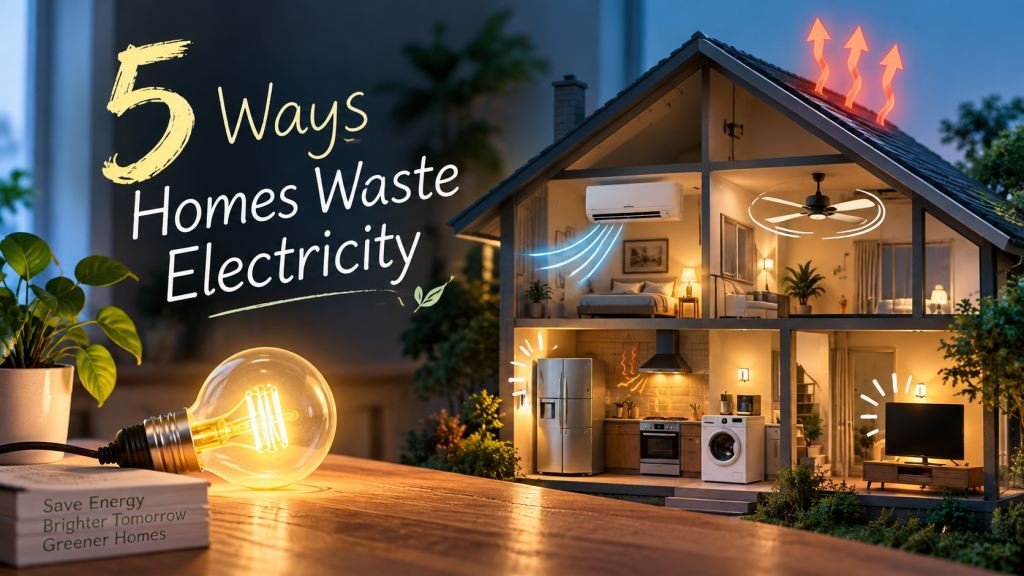
Many homes use more electricity than necessary without realizing it. Small habits, inefficient appliances, and unnecessary energy consumption can increase monthly electricity bills. Here are 5 common ways homes waste electricity and what you can do about them.
1. Leaving Lights and Fans On
Lights and fans are often left running in empty rooms. While a single light may not use much electricity, unnecessary usage across multiple rooms can add up over time.
Simple fix: Turn off lights and fans whenever you leave a room. Make use of natural daylight whenever possible.
2. Running the AC Inefficiently
Air conditioners can be one of the largest electricity consumers in a home. Running an AC for long periods, setting the temperature unnecessarily low, or using it in a poorly sealed room can increase consumption.
Simple fix: Keep doors and windows closed, clean the filters regularly, and use a comfortable temperature setting.
3. Using Old or Inefficient Appliances
Older refrigerators, air conditioners, water heaters, and other appliances may consume more electricity than newer, efficient models.
Simple fix: When replacing an appliance, compare its energy efficiency and estimated operating cost—not just its purchase price.
4. Keeping Electronics on Standby
Televisions, computers, gaming consoles, speakers, chargers, and other electronics can consume small amounts of electricity while plugged in, even when they’re not actively being used.
Simple fix: Switch off unnecessary equipment completely when practical. A power strip can make it easier to disconnect several devices at once.
5. Heating Water for Too Long
Electric water heaters can consume significant electricity because heating water requires substantial energy. Leaving a heater switched on longer than necessary can waste power.
Simple fix: Heat only the amount of water needed and switch the heater off when it is no longer required.
Final Thought
Reducing electricity waste doesn’t always require major changes. Switching off unused appliances, improving AC usage, maintaining equipment, and paying attention to standby consumption can help reduce unnecessary energy use.
The first step is simple: identify where electricity is being used and focus on eliminating the consumption that provides little or no benefit.
thumbnail for this
Edit
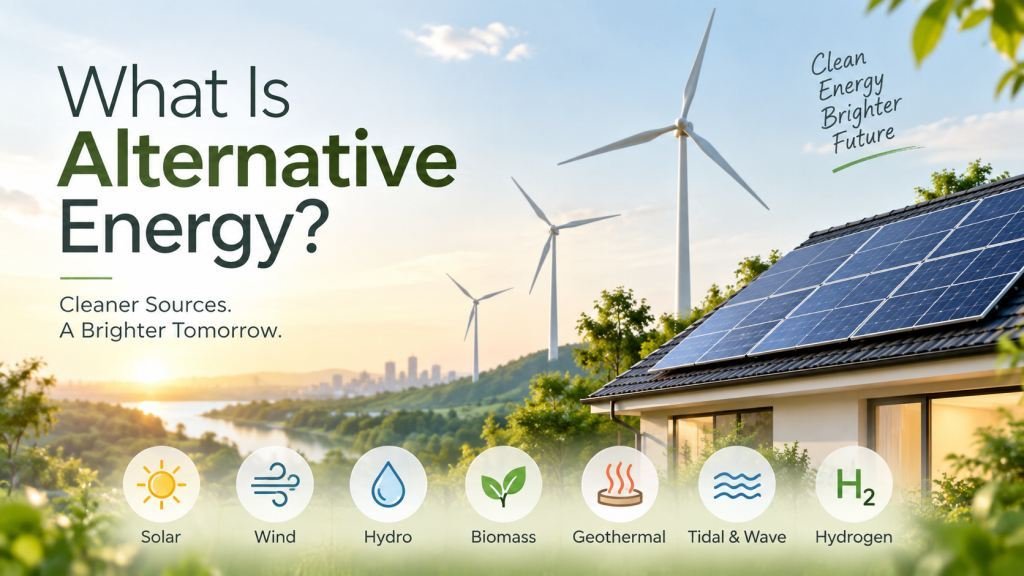
What Is Alternative Energy? article more than 1000 words
What Is Alternative Energy? A Complete Guide to Cleaner Energy Sources
Energy is essential to almost everything we do. We use electricity to light our homes, power appliances, charge phones, operate factories, run transportation systems, heat and cool buildings, and support modern technology. For much of modern history, the world’s energy needs have been supplied primarily by fossil fuels such as coal, oil, and natural gas.
However, increasing energy demand, concerns about air pollution, resource availability, and climate change have encouraged people, businesses, and governments to explore other ways of producing energy. This is where the idea of alternative energy becomes important.
Alternative energy refers broadly to energy sources that can be used instead of conventional fossil-fuel-based energy sources. These sources include solar, wind, hydropower, geothermal, biomass, tidal, and other technologies.
But what exactly does alternative energy mean? How does it work? What are its advantages and disadvantages? And how is it different from renewable energy?
Let’s explore these questions in detail.
What Is Alternative Energy?
Alternative energy is energy produced from sources that provide an alternative to traditional fossil fuels such as coal, oil, and natural gas.
The term is generally used for energy sources that can reduce dependence on conventional fuels.
Some major examples include:
- Solar energy
- Wind energy
- Hydropower
- Geothermal energy
- Biomass energy
- Tidal energy
- Wave energy
- Hydrogen produced using low-carbon electricity
The exact definition can vary depending on the context.
For example, solar and wind energy are both alternative and renewable. Nuclear energy is often considered an alternative energy source because it does not rely on fossil fuels for electricity generation, although it is not renewable in the same sense as sunlight or wind.
This distinction is important.
Alternative Energy vs. Renewable Energy
The terms are sometimes used interchangeably, but they don’t mean exactly the same thing.
Renewable energy comes from natural processes that are continually replenished, such as sunlight, wind, flowing water, and Earth’s internal heat.
Alternative energy is a broader term describing energy sources used as alternatives to conventional fossil fuels.
Therefore, renewable energy can be considered a major category of alternative energy, but the two terms are not always identical.
Why Do We Need Alternative Energy?
The traditional energy system has historically depended heavily on fossil fuels.
Coal, oil, and natural gas have powered industrial development and continue to supply a large share of global energy. However, relying heavily on these resources creates several challenges.
1. Fossil Fuels Are Finite
Coal, oil, and natural gas are formed through geological processes over extremely long periods.
Humans consume these resources much faster than they naturally form.
Renewable resources such as sunlight and wind, on the other hand, are naturally replenished.
2. Air Pollution
Burning fossil fuels releases pollutants that can affect air quality.
Large-scale fossil-fuel combustion can produce pollutants such as particulate matter, sulfur dioxide, nitrogen oxides, and other emissions depending on the fuel and technology used.
Reducing dependence on combustion-based energy can help address certain air-pollution problems.
3. Greenhouse Gas Emissions
The combustion of fossil fuels releases carbon dioxide, a major greenhouse gas.
Reducing greenhouse-gas emissions is one reason countries and businesses are investing in lower-carbon energy technologies.
4. Energy Security
Countries that depend heavily on imported fuels can be affected by international price changes, supply disruptions, and geopolitical events.
Developing domestic energy resources—including solar, wind, hydro, and geothermal power where available—can diversify energy supplies.
1. Solar Energy
Solar energy is one of the most widely recognized forms of alternative energy.


5
Solar panels use photovoltaic cells to convert sunlight directly into electricity.
A typical solar power system may include:
- Solar panels
- Inverter
- Mounting system
- Electrical protection equipment
- Wiring
- Optional battery storage
Solar energy can be used for homes, businesses, farms, factories, telecommunications equipment, and large utility-scale power plants.
Advantages of Solar Energy
Solar energy has several benefits:
- Sunlight is widely available.
- Solar systems can be installed on rooftops.
- Solar generation does not require fuel combustion during operation.
- Systems can be deployed at different scales.
- Solar can be combined with batteries for energy storage.
Limitations
Solar power also has limitations.
Solar panels generate electricity primarily when sunlight is available. Production can fall during cloudy weather and stops at night.
This means solar systems may need to be combined with batteries, grid electricity, or other generation sources depending on the application.
2. Wind Energy
Wind energy converts the movement of air into electricity.


6
Modern wind turbines use blades connected to a rotor and generator. When wind causes the blades to rotate, the generator produces electricity.
Wind farms can contain dozens or hundreds of turbines.
Wind energy is particularly useful in locations with consistent and sufficiently strong wind resources.
Benefits of Wind Energy
- Wind is naturally replenished.
- Turbines do not require fuel combustion to generate electricity.
- Wind farms can produce significant amounts of electricity.
- Land around turbines can sometimes continue to support agricultural activities.
Challenges
Wind speeds vary, so electricity production is variable.
Wind projects also require suitable locations, transmission infrastructure, and careful environmental and community planning.
3. Hydropower
Hydropower uses moving or falling water to generate electricity.


8
In a conventional hydroelectric facility, water flows through turbines that drive generators.
Hydropower has been used for electricity generation for more than a century and remains an important source of electricity in many countries.
Advantages
Hydropower can provide large quantities of electricity and, depending on the facility, can respond relatively quickly to changes in electricity demand.
Some reservoirs can also provide energy-storage capabilities when operated in conjunction with pumped-storage systems.
Challenges
Large dams can significantly alter rivers and ecosystems.
Hydropower development may also involve land-use changes, relocation of communities, and impacts on aquatic environments.
4. Geothermal Energy
Geothermal energy comes from heat inside the Earth.


6
In areas with suitable underground heat resources, geothermal systems can use hot water or steam to produce electricity.
Geothermal energy can also be used directly for heating in some locations.
One major advantage is that geothermal electricity can provide relatively consistent generation because it doesn’t depend directly on sunlight or daily wind conditions.
However, suitable geothermal resources are not available everywhere, and developing them can require significant exploration and drilling.
5. Biomass Energy
Biomass energy comes from organic material.
Examples include:
- Agricultural residues
- Forestry residues
- Organic waste
- Certain energy crops
- Biogas from organic materials
Biomass can be converted into heat, electricity, or fuels.
For example, organic waste can be processed in anaerobic digesters to produce biogas. That gas can then be used for heating or electricity generation.
Is Biomass Renewable?
Biomass can be renewable when biological resources are managed sustainably and regenerated at an appropriate rate.
However, renewable does not automatically mean impact-free.
The environmental effects of biomass depend heavily on what material is used, how it is produced, transported, and converted into energy.
6. Tidal and Wave Energy
Oceans contain enormous amounts of energy generated by tides and waves.


6
Tidal-energy technologies use predictable movements of seawater to generate electricity.
Wave-energy technologies attempt to capture energy from ocean waves.
One advantage of tidal energy is that tides are highly predictable.
However, marine energy technologies are still less widely deployed than solar, wind, and hydropower, partly because operating equipment in harsh ocean environments can be technically challenging and expensive.
7. Hydrogen Energy
Hydrogen is another important part of discussions about alternative energy.
Hydrogen is not usually an energy source in the same way that sunlight or wind is. Instead, it is an energy carrier.
Hydrogen can be produced using different methods.
For example, electrolysis uses electricity to split water into hydrogen and oxygen.
When electricity for electrolysis comes from renewable sources, the resulting hydrogen is commonly called green hydrogen.
Hydrogen may have potential applications in areas that are difficult to electrify directly, including certain industrial processes and some forms of heavy transportation.
However, producing, storing, transporting, and using hydrogen involves energy losses and infrastructure challenges.
How Does Alternative Energy Work in a Home?
Alternative energy doesn’t necessarily mean completely disconnecting a house from the electricity grid.
A homeowner might install a rooftop solar system that generates electricity during daylight hours.
The system can then:
- Generate electricity from sunlight.
- Supply electricity to household appliances.
- Send excess electricity to the grid where permitted.
- Store electricity in batteries where a battery system is installed.
- Draw electricity from the grid when solar production isn’t sufficient.
This creates a system where conventional grid electricity and alternative energy can work together.
Can Alternative Energy Work Without Batteries?
Yes.
A solar system does not necessarily require batteries.
A grid-connected solar system can send electricity to household loads during generation periods and interact with the grid according to local electricity rules.
Batteries become particularly useful when the goal is to store electricity for later use.
For example:
Daytime: Solar panels generate electricity.
Afternoon: Excess electricity may charge batteries.
Night: Stored electricity can supply selected household loads.
However, batteries add cost and have their own efficiency, lifespan, and environmental considerations.
Advantages of Alternative Energy
Alternative energy technologies can provide several important benefits.
Reduced Dependence on Fossil Fuels
Using solar, wind, hydro, geothermal, and other alternatives can diversify the energy mix.
Lower Operational Emissions for Many Technologies
Solar and wind systems generate electricity without burning fuel during operation.
Energy Independence
Homes, businesses, and communities can potentially generate some of their own electricity.
Scalability
Alternative energy systems range from small rooftop installations to enormous utility-scale facilities.
Technological Innovation
Growth in alternative energy has encouraged advances in batteries, power electronics, smart grids, electric vehicles, and energy-management systems.
Challenges of Alternative Energy
Alternative energy is not a perfect solution without challenges.
Intermittency
Solar and wind generation varies with weather and time.
Energy Storage
Batteries and other storage technologies can help balance supply and demand, but they have costs and technical limitations.
Infrastructure
Large renewable projects often require new transmission lines and grid upgrades.
Land Use
Utility-scale projects can require significant amounts of land.
Materials
Energy technologies require materials for manufacturing equipment, electrical systems, batteries, and infrastructure.
Initial Investment
Some alternative-energy systems require substantial upfront investment even when they can reduce operating costs over time.
Alternative Energy and the Future of Electricity
The future energy system is unlikely to depend on one technology alone.
Instead, different technologies can complement one another.
For example, a future electricity system could combine:
Solar + Wind + Hydropower + Batteries + Grid Infrastructure + Demand Management
Solar can produce substantial electricity during sunny periods. Wind can generate power at different times. Hydropower can provide flexibility where suitable resources exist. Batteries can store electricity for shorter periods. Transmission networks can move electricity between regions.
Other technologies can contribute where they make economic and technical sense.
What Can Individuals Do?
You don’t need to build a wind farm or install a massive solar plant to participate in the transition toward alternative energy.
Individuals can start with simple steps:
- Reduce unnecessary electricity consumption.
- Use energy-efficient appliances.
- Improve home insulation where practical.
- Consider rooftop solar if suitable.
- Monitor electricity consumption.
- Use efficient lighting.
- Reduce unnecessary heating and cooling.
- Learn about local renewable-energy programs.
- Consider battery storage based on actual household needs.
Energy efficiency is particularly important because the cleanest unit of energy to generate is often the unit that doesn’t need to be consumed in the first place.
Conclusion
Alternative energy represents a broad collection of energy technologies that can provide alternatives to conventional fossil-fuel-based energy.
Solar, wind, hydropower, geothermal, biomass, tidal energy, and hydrogen-related technologies each have different characteristics, benefits, limitations, costs, and applications.
There is no single alternative-energy technology that works perfectly everywhere. Solar may be highly suitable for one location, while hydropower, wind, geothermal, or another technology may be more appropriate elsewhere.
The larger goal is to create an energy system that is reliable, affordable, efficient, and increasingly capable of reducing dependence on high-emission fossil fuels.
For homeowners, the transition can begin with something as simple as understanding how much electricity the household uses, improving efficiency, and exploring whether technologies such as rooftop solar or battery storage make sense for their particular situation.
As technology continues to improve, alternative energy is likely to become an increasingly important part of how homes, businesses, transportation systems, and industries produce and use energy.