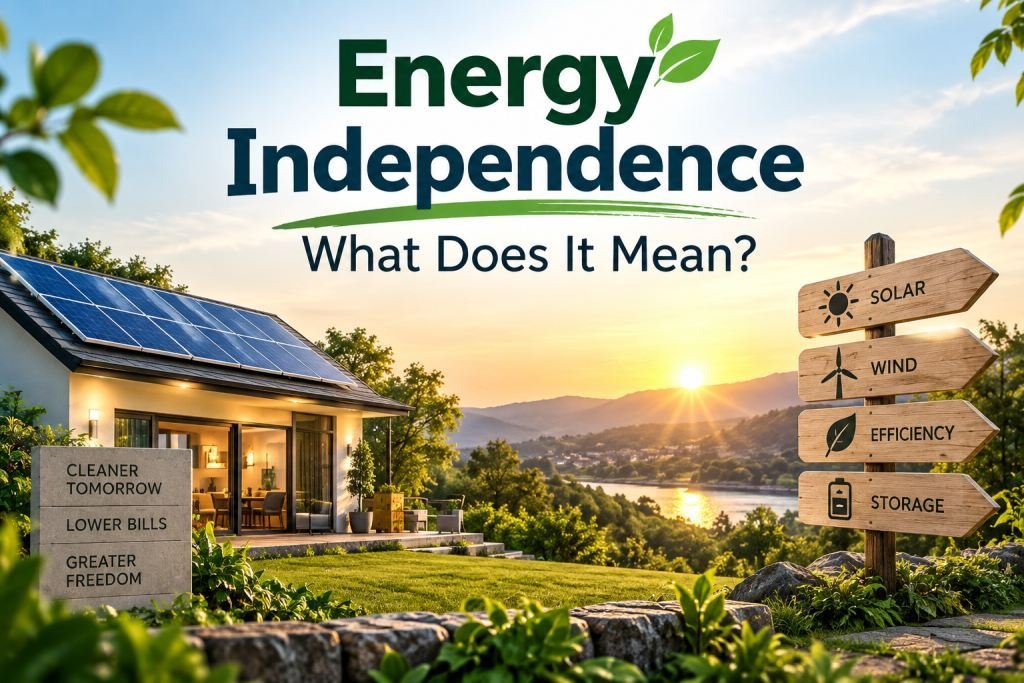


The phrase “energy independence” sounds simple, but it can mean different things to different people. For some homeowners, it means producing enough electricity from solar panels to significantly reduce their dependence on the utility grid. For others, it means having backup power during outages. And for people living in remote locations, it may mean creating a completely off-grid energy system.
At its core, energy independence means having greater control over where your energy comes from, how much you use, and how dependent you are on outside energy supplies.
It doesn’t necessarily mean disconnecting from the electrical grid. In many cases, a home can remain connected to the grid while producing part of its own electricity and storing energy for later use.
What Does Energy Independence Actually Mean?
Energy independence is the ability to meet a significant portion of your energy needs without relying entirely on external sources.
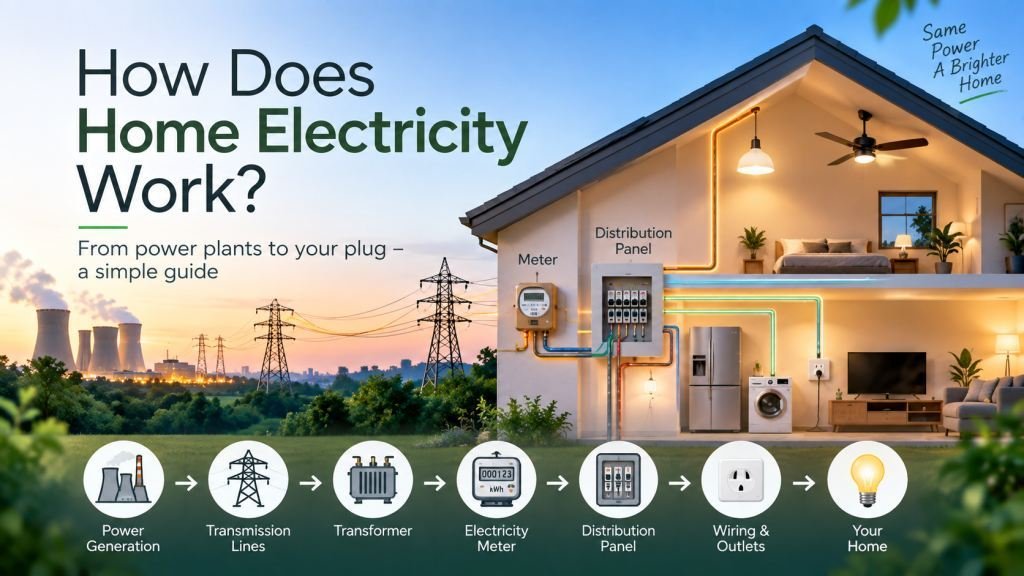
Imagine a typical home. Electricity arrives through the utility network, while heating and cooking may depend on natural gas, LPG, or other fuels. The homeowner has limited control over the source, availability, and price of those energy supplies.
An energy-independent approach changes this relationship.
A household might install solar panels, improve insulation, use efficient appliances, add battery storage, and reduce unnecessary electricity consumption. Instead of simply buying more energy when consumption increases, the household works on both sides of the equation:
Produce more useful energy + consume less energy = greater independence.
Complete independence is not always practical or necessary. Even homes with solar panels may depend on the grid at certain times, particularly during periods of low sunlight or high electricity demand.
Solar Power Is Often the Starting Point


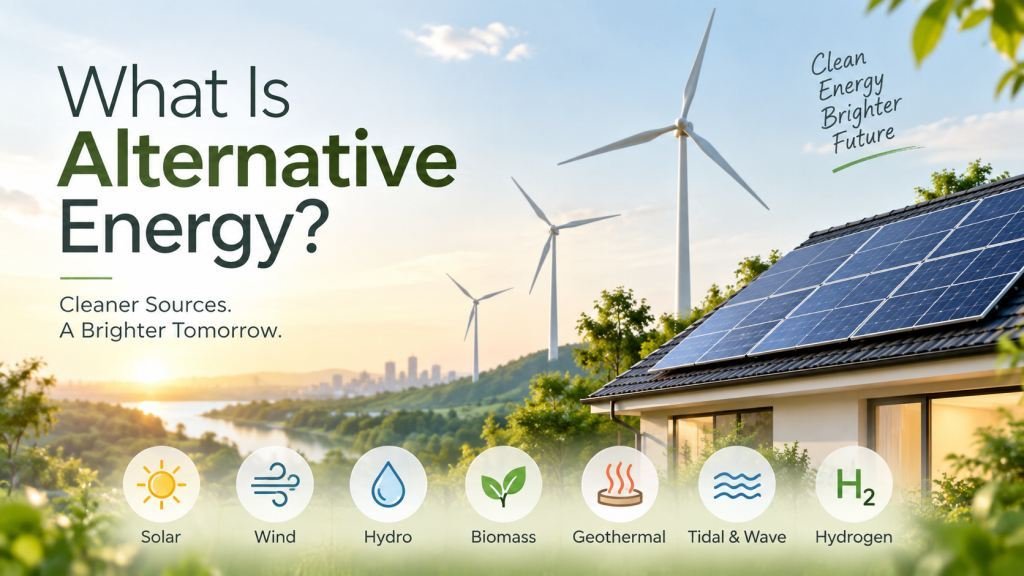
For homeowners interested in energy independence, solar photovoltaic (PV) systems are one of the most accessible technologies.
Solar panels convert sunlight into electricity during the day. That electricity can be used immediately to operate appliances, lighting, computers, pumps, and other equipment.
Any excess electricity can potentially be stored in batteries or, depending on the local electricity system and applicable rules, exported to the grid.
Solar has another advantage: sunlight is widely available and doesn’t need to be transported to your property like conventional fuels.
However, solar production changes throughout the day and across seasons. A system that produces plenty of electricity at noon may produce very little after sunset.
That’s where energy efficiency and storage become important.
Batteries Add Flexibility


A solar panel produces electricity when the Sun is shining. But many households consume significant amounts of electricity in the evening.
A battery energy storage system can help bridge that gap.
During periods of high solar production, excess electricity can be stored. Later, the stored energy can be used when solar production falls.
Battery storage can also provide backup power for selected household loads during a grid outage, depending on the system design.
However, batteries are not unlimited energy sources. Their capacity, charging rate, inverter capability, and usable energy determine how much equipment they can support and for how long.
This is why an energy-independent home isn’t simply a home with “lots of batteries.” Good system design starts by understanding actual energy consumption.
Energy Efficiency Is Just as Important


One of the most overlooked parts of energy independence is using less energy in the first place.
Consider two homes that each want to install solar power. If one home consumes twice as much electricity as the other, it may require a considerably larger generation and storage system to achieve a similar level of independence.
Simple improvements can make a meaningful difference.
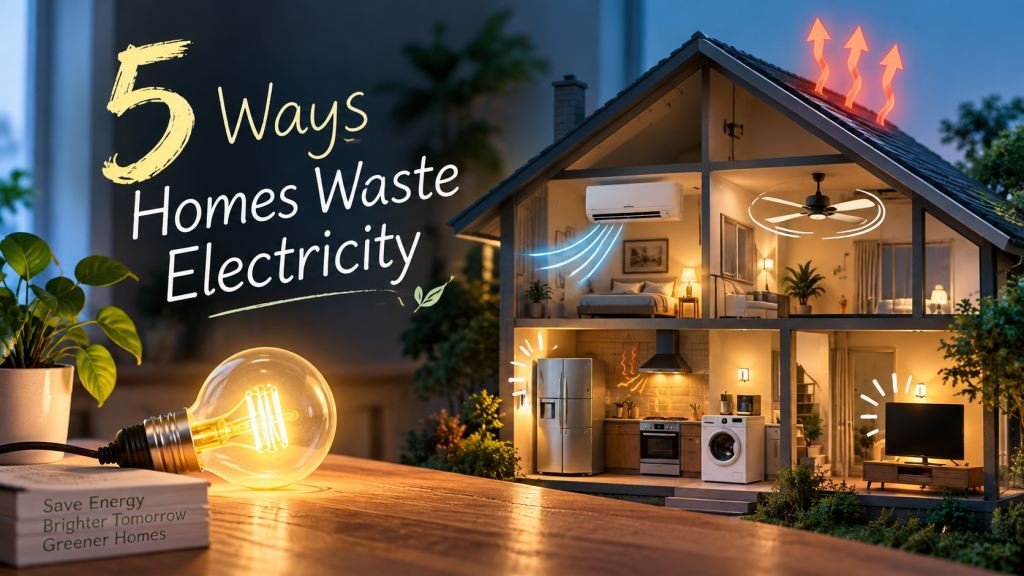
LED lighting generally consumes less electricity than traditional incandescent lighting. Efficient refrigerators and air conditioners can reduce long-term consumption. Proper insulation can reduce heating and cooling requirements. Sealing unnecessary air leaks can also improve building efficiency.
Smart energy habits matter too.
Running high-consumption appliances during periods of strong solar production can allow more locally generated electricity to be used directly rather than stored or exported.
The goal isn’t necessarily to make life uncomfortable. It’s about getting more useful work from every unit of energy.
Can a Home Become Completely Off-Grid?
Technically, some homes can operate without a utility connection, but doing so requires careful planning.
An off-grid system generally needs enough generation and storage to handle periods when renewable energy production is low.
For example, a solar-only system needs to account for cloudy weather and nighttime consumption. The system may require substantial battery capacity, backup generation, or another energy source.
This is why completely off-grid living can require more equipment than simply installing solar panels on a grid-connected home.
For many households, partial energy independence may be a more practical goal. A home can remain connected to the grid while generating a substantial portion of its own electricity and maintaining backup capability.
Energy Independence Isn’t Only About Electricity
Energy independence can extend beyond electrical power.
A household can reduce its dependence on external energy sources by using solar water heating, passive cooling, efficient cooking equipment, improved insulation, or other technologies that reduce energy consumption.


For example, if a household uses solar energy directly to heat water, it may reduce the amount of electricity or fuel required for that task.
Similarly, designing a home to take advantage of natural daylight and ventilation can reduce the need for artificial lighting and mechanical cooling.
In other words, energy independence isn’t necessarily one giant technology. It can be a combination of many smaller improvements.
Why Energy Independence Matters
There are several reasons people explore energy independence.
Resilience is one. A home with appropriate backup systems may be better prepared for certain electricity interruptions.
Energy cost management is another consideration. Generating some electricity locally can change how much energy a household purchases from the grid, although installation and maintenance costs need to be considered.
There is also an environmental dimension. Renewable energy systems can reduce reliance on fossil-fuel-based electricity, depending on how the electricity would otherwise have been generated.
Perhaps most importantly, energy independence encourages people to understand their own energy consumption.
Instead of viewing electricity as something that simply arrives through a cable, homeowners can begin thinking about generation, storage, efficiency, and demand as parts of one system.
A Practical Path Toward Greater Independence
Energy independence doesn’t have to happen overnight.
A sensible approach can begin with understanding how much electricity the home currently consumes. From there, homeowners can identify major energy-consuming appliances and look for efficiency improvements.
The next step might be renewable generation, such as rooftop solar. Battery storage can be considered if backup capability or greater self-consumption is important.
Over time, additional technologies can be added as needs and budgets change.
The key idea is that energy independence is a spectrum, not an on/off switch.
You don’t have to disconnect from the grid or build a completely off-grid house to benefit from producing some of your own energy. Even modest changes—using energy more efficiently, generating renewable electricity, and having a plan for outages—can move a household toward greater control over its energy future.
Ultimately, energy independence is less about completely escaping the energy system and more about building a smarter, more resilient relationship with the energy your home uses every day.