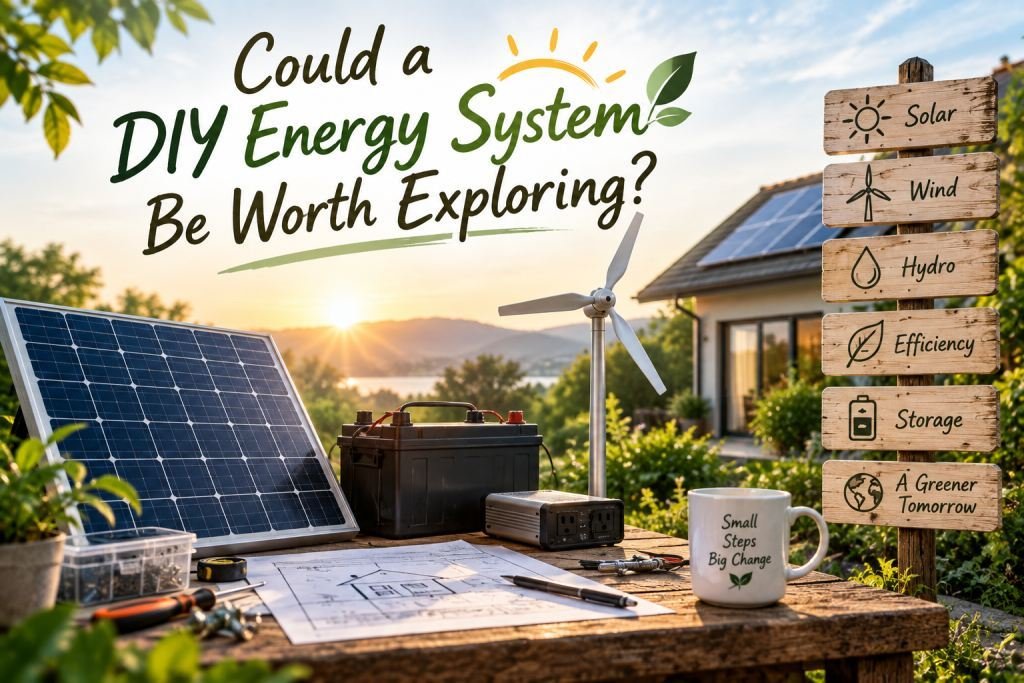


The idea of building your own energy system can sound both exciting and intimidating. Solar panels, batteries, inverters, charge controllers, small wind turbines, and energy monitoring equipment are now widely available, making it easier than ever to experiment with renewable energy at home.
But is a DIY energy system actually worth exploring?
For many people, the answer depends less on whether a homemade system can completely power a house and more on what they want to accomplish. A small DIY setup can be an excellent way to learn about renewable energy, reduce the electricity used for selected devices, create backup power, or experiment with off-grid living.
The key is to start with realistic expectations.
What Is a DIY Energy System?
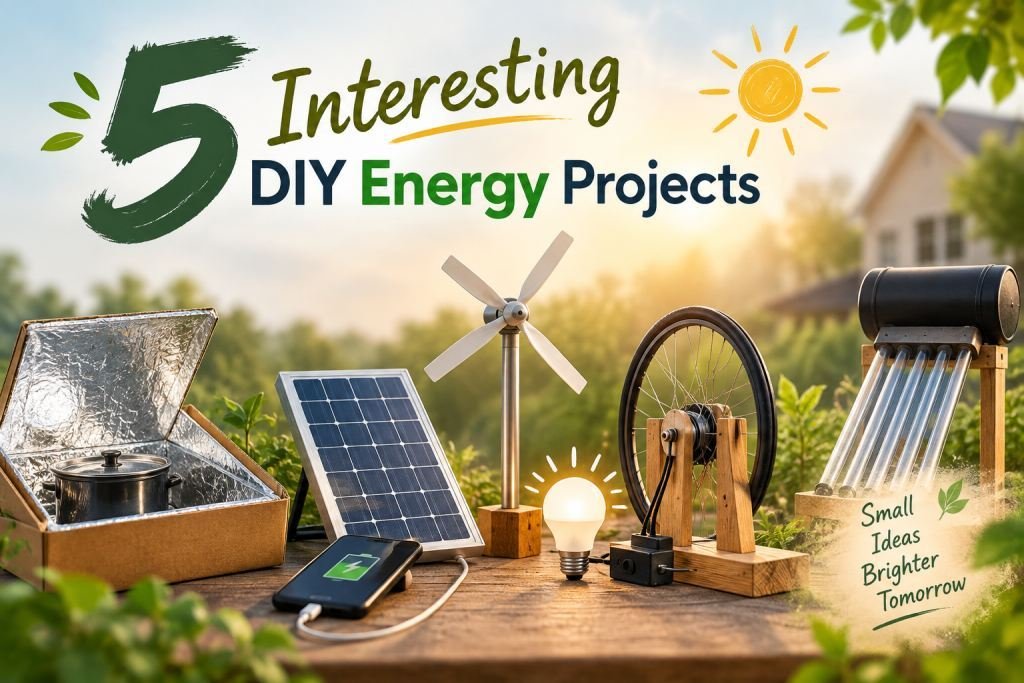
A DIY energy system is essentially a collection of components that allows you to generate, store, monitor, or use energy independently.
A basic solar setup might contain:
- Solar panels
- Charge controller
- Rechargeable battery
- Inverter, if AC power is required
- Fuses and appropriate protection
- Wiring and connectors
- Energy-monitoring equipment
More ambitious systems might include multiple solar panels, several batteries, a wind generator, smart energy controls, or backup generation.
However, DIY doesn’t necessarily mean building every component from raw materials. In many cases, the practical approach is to purchase certified components and design, assemble, and monitor the system yourself.
That distinction is important because electrical energy systems can become dangerous when improperly designed.
Start With a Small Goal


One of the biggest mistakes beginners make is starting with the question:
“Can I power my entire house?”
A better question is:
“What is the smallest useful system I can build?”
For example, you could design a low-voltage solar system specifically for LED lights, a small fan, garden lighting, a Wi-Fi device, or other modest loads.
A small project lets you understand how much energy your equipment actually consumes. You can measure the output of your solar panel, observe battery charging, and calculate how long stored energy lasts.
Once you understand the fundamentals, expanding the system becomes much easier.
Why Solar Is a Popular Starting Point
Solar power is particularly attractive for DIY experimentation because the basic concept is straightforward.
Solar panels convert sunlight into electricity. That electricity can either be consumed immediately, stored in a battery, or managed by an appropriate system depending on the design.


A small solar panel can therefore become the heart of a learning project.
You can experiment with panel orientation, sunlight intensity, shading, battery capacity, and energy consumption. Adding a simple monitoring device can make the experiment even more useful because you can see how much energy is being produced and consumed.
Solar also introduces an important lesson: energy production isn’t constant.
A panel may generate substantially more energy during strong midday sunlight than during cloudy conditions or near sunset. This is why storage and energy management become important when designing a useful system.
Batteries Change the Equation
A solar panel alone isn’t necessarily enough if you want electricity after sunset.
This is where battery storage becomes useful.
During periods when your solar panels produce more electricity than your selected loads require, a properly designed charging system can store energy in a battery. That stored energy can then be used later.
However, batteries require careful handling. Different battery chemistries have different charging requirements, voltage characteristics, protection requirements, and operating limits.
A DIY system should therefore use a battery-management or charging system appropriate for the specific battery technology.
It’s also important to understand the difference between battery capacity and usable energy. A battery’s nominal capacity doesn’t necessarily mean every unit of that capacity can safely be used under every condition.
For beginners, using commercially designed battery systems and protection equipment is generally more sensible than constructing battery packs from loose cells.
What About a DIY Wind System?


Wind power can also be explored on a small scale.
A small turbine can demonstrate how moving air turns mechanical energy into electrical energy. Some experimental designs use lightweight blades connected to a generator.
The challenge is that wind power depends heavily on location.
A turbine sitting in turbulent air behind buildings or trees may produce disappointing results. Wind speed also changes constantly, and the amount of available power increases rapidly as wind speed increases.
For that reason, a small wind project is often more valuable as an engineering and measurement experiment than as a serious household power source.
If you live in an area with consistent wind and have suitable space, however, the technology can be worth investigating more seriously.
Can a DIY System Save Money?
This is where expectations need to be realistic.
Building a small system yourself may reduce some installation or labor costs, but equipment isn’t free. Solar panels, batteries, controllers, inverters, mounting hardware, cables, protection devices, monitoring equipment, and maintenance can all add up.
A DIY system can also require your time.
If the goal is purely to reduce the electricity bill, you should compare the total cost of the system with the amount of electricity it is expected to offset.
On the other hand, DIY projects provide something that a simple financial calculation doesn’t capture: education and flexibility.
You learn how energy systems work, how your household consumes electricity, and which technologies actually make sense for your situation.
Energy Efficiency May Be the Cheapest First Step


Before purchasing additional generation equipment, look at how much energy you’re already using.
Replacing inefficient lighting, improving insulation, reducing unnecessary standby consumption, and choosing efficient appliances can lower your overall energy demand.
Energy monitoring can be especially useful.
A plug-in energy meter or suitable monitoring device can reveal how much electricity individual appliances consume. You might discover that one device uses considerably more energy than expected.
Reducing consumption means that a future solar-and-battery system doesn’t have to work as hard.
This leads to an important principle:
The easiest energy to generate is often the energy you don’t need to use.
Safety Should Come Before Experimentation
DIY energy projects become more serious as voltage, current, battery capacity, and system size increase.
Low-voltage educational projects are generally a more appropriate starting point for beginners. Household AC wiring, large battery banks, rooftop electrical work, and grid-connected systems require appropriate technical knowledge and safety procedures.
Never connect a homemade generator or inverter directly to household wiring or the utility grid without equipment and installation practices designed for that purpose.
Use correctly rated cables, fuses, circuit protection, connectors, enclosures, and disconnects. Keep batteries protected from short circuits, excessive heat, moisture, and physical damage.
For grid-connected solar or larger electrical installations, working with a qualified professional can be far safer than attempting every part yourself.
So, Is a DIY Energy System Worth Exploring?
A DIY energy system can absolutely be worth exploring if you approach it as a practical learning project rather than an instant replacement for the electrical grid.
A small solar-and-battery system can teach you about generation and storage. An energy monitor can reveal where electricity is being consumed. A miniature wind turbine can demonstrate mechanical energy conversion. Energy-efficiency improvements can reduce the amount of power you need in the first place.
The most sensible path is usually to start small, measure everything, learn from the results, and expand gradually.
You don’t need to build an entirely off-grid house to benefit from the experience. Even a small system powering a few lights or devices can give you a much better understanding of renewable energy.
Ultimately, the real value of a DIY energy project isn’t only the electricity it produces. It’s the knowledge it gives you about how energy is generated, stored, consumed, and managed—and how much more control you can potentially have over your own energy use.