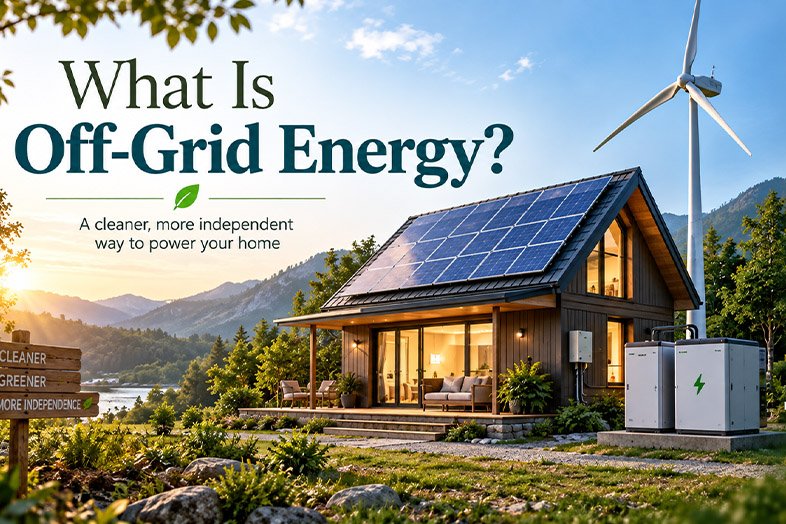
Imagine a home that can produce its own electricity, store extra power for later, and continue operating without depending on the local electricity grid. This is the basic idea behind an off-grid energy system.
Off-grid energy refers to an electricity system that is not connected to the main electricity distribution network. Instead, electricity is generated, stored, and managed locally. The International Energy Agency (IEA) defines off-grid systems as electricity systems that are not connected to the main regulated electricity distribution system. (IEA)
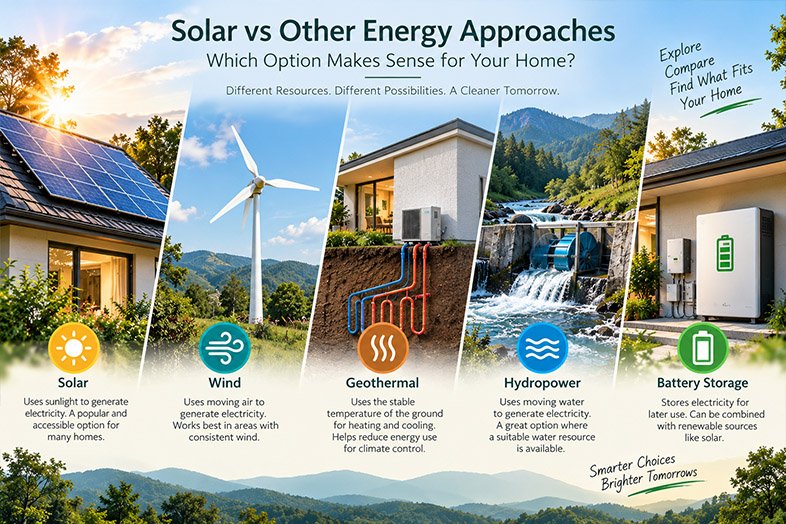
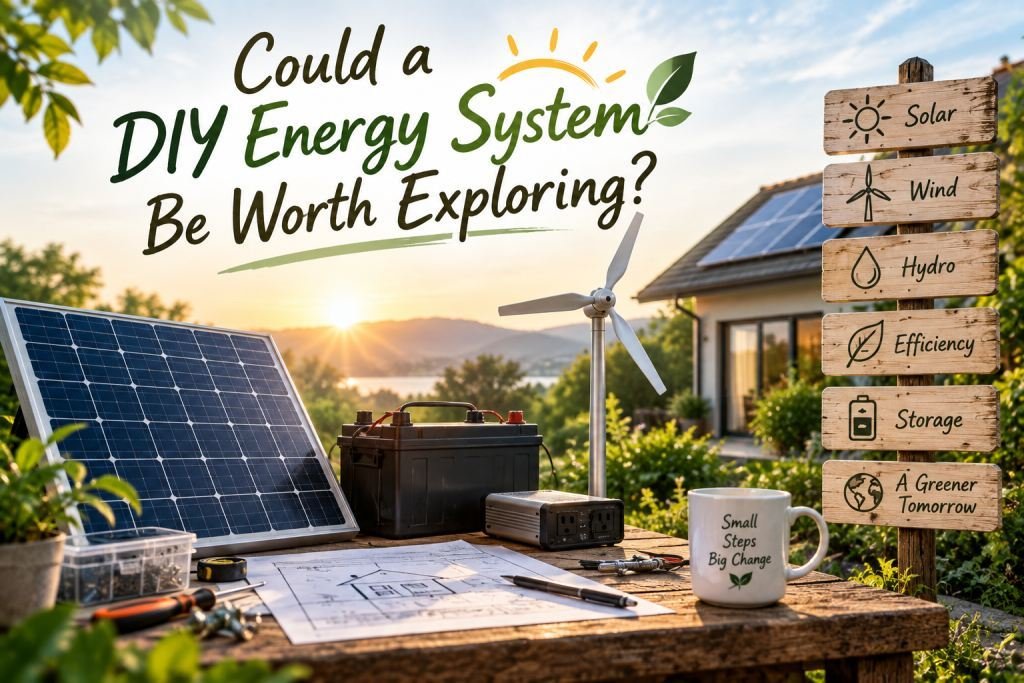
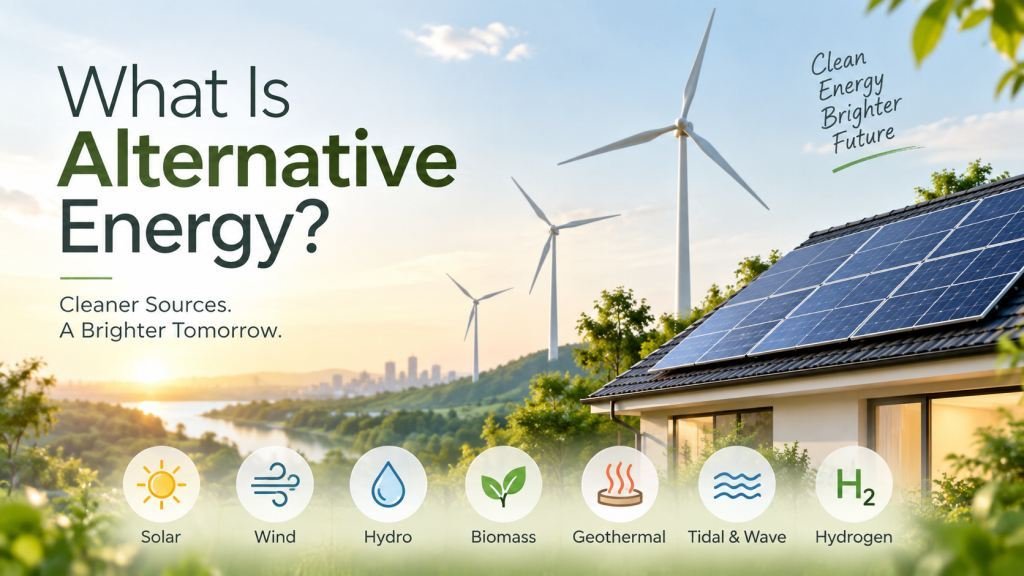
For many people, off-grid energy is associated with solar panels and batteries. However, a complete system can combine several technologies, including solar, wind, small-scale hydro, batteries, generators, and energy-efficient appliances.


Energy in Simple Terms
An off-grid home does not simply “make electricity.” It needs to balance three things: how much energy is produced, how much is stored, and how much the home consumes.
How Does an Off-Grid Energy System Work?
A typical off-grid home energy system follows a relatively simple process:
Energy source → Controller/Inverter → Battery storage → Home appliances
During the day, solar panels can generate electricity. Some of that electricity can be used immediately by appliances, while excess electricity can charge a battery.
When solar production falls, such as at night or during periods of poor weather, the battery can supply electricity to the home.
An inverter is also an important part of many systems because it converts the direct-current electricity produced by sources such as solar panels and stored in batteries into alternating-current electricity used by many household appliances.
The U.S. Department of Energy explains that batteries can store electricity and release it when needed, making storage an important component of systems that need electricity when generation is unavailable. (The Department of Energy’s Energy.gov)


Main Components of an Off-Grid System
| Component | Main purpose |
|---|---|
| Solar panels | Generate electricity from sunlight |
| Wind turbine | Generate electricity from wind |
| Battery bank | Store electricity for later |
| Inverter | Convert electricity into a form suitable for household use |
| Charge controller | Helps regulate charging of batteries |
| Backup generator | Provides additional electricity when needed |
| Monitoring system | Tracks energy production and consumption |
| Efficient appliances | Reduce overall electricity demand |
The exact combination depends on the location, climate, available resources, household size, and electricity requirements.
Solar Power Is a Popular Off-Grid Option
Solar photovoltaic technology is one of the most widely used options for off-grid electricity.
Solar panels have an important advantage: they can be installed at relatively small scales. The IEA notes that photovoltaic systems can be used in off-grid applications ranging from very small systems to larger mini-grid installations. (IEA)
A small solar system might operate lights, fans, phones, and basic electronics. A larger system could potentially support refrigerators, water pumps, computers, appliances, and other household loads.
However, solar panels do not generate electricity at night. This is why battery storage can be particularly important for a home that intends to operate independently of the grid.
Key Point
Solar panels generate electricity. Batteries store electricity. An inverter helps make that electricity usable by household equipment. These components perform different jobs and are often designed to work together.
What Happens When the Sun Isn’t Shining?
Weather is one of the biggest considerations when designing an off-grid system.
Cloudy days can reduce solar generation, while several days of poor weather may require the system to depend more heavily on stored energy or another generation source.
This is why off-grid systems are often designed around energy storage, careful load management, and sometimes backup generation.
A hybrid system might combine:
Solar + Battery + Wind + Backup Generator
The idea is to use different sources to reduce dependence on any single source of electricity.


Off-Grid vs Grid-Connected Energy
The biggest difference is the relationship with the main electricity network.
| Feature | Off-grid system | Grid-connected system |
|---|---|---|
| Main grid connection | No | Yes |
| Local generation | Usually required | Optional |
| Battery storage | Often important | Optional |
| Grid electricity | Not normally available | Available |
| Backup requirements | Must be planned locally | Grid can provide backup |
| Energy independence | Higher | Lower |
| System planning | More important | Generally simpler |
A grid-connected solar home can still use electricity from the utility when solar production is insufficient. An entirely off-grid home does not have that option.
This makes system sizing particularly important.
Why Do People Choose Off-Grid Energy?
Off-grid systems can be useful in remote areas where connecting to the main electricity network is difficult or expensive.
The IEA notes that stand-alone systems can be particularly useful in sparsely populated and remote areas where extending traditional electricity infrastructure may be challenging. (IEA)
Other reasons people explore off-grid energy include:
- Remote homes and cabins
- Farms and agricultural properties
- Rural communities
- Backup and resilience applications
- Locations with unreliable grid service
- Greater control over local electricity generation
Solar-plus-storage systems can also support electricity during grid disruptions, although a normal grid-connected solar installation is not automatically capable of operating during a grid outage. Properly configured inverters and storage are needed for that capability. (The Department of Energy’s Energy.gov)
Important Distinction
A house with solar panels is not necessarily an off-grid house. If the solar system remains connected to the utility network and depends on the grid, it is still a grid-connected system.
The Challenge: Matching Energy Supply With Demand
The biggest challenge of going off-grid is not simply generating electricity. It is ensuring that enough electricity is available when you need it.
For example, a household might produce plenty of solar electricity during the afternoon but require much more electricity after sunset.
This creates a timing problem.
A well-designed system therefore considers:
Daily electricity consumption + peak power demand + battery capacity + renewable generation + backup options
Energy efficiency becomes especially valuable in an off-grid home because reducing consumption can reduce the amount of generation and storage capacity required.
Using LED lighting, efficient refrigerators, high-efficiency fans, and other efficient appliances can make the system easier to manage.
Is Off-Grid Energy Completely Independent?
An off-grid system can be designed to operate independently, but independence does not mean maintenance-free.
Solar panels need to remain clean and unobstructed. Batteries have operating limits and eventually need replacement. Inverters and other electrical equipment also require monitoring and maintenance.
The system should also be designed by qualified professionals, particularly because batteries, inverters, electrical wiring, and backup generators can present serious safety risks when incorrectly installed.
Final Thoughts
Off-grid energy is essentially about creating a local electricity ecosystem instead of depending entirely on a centralized grid.
Solar panels can generate power, batteries can store it, inverters can convert it for household use, and additional generation sources can provide flexibility when renewable production is insufficient.
For remote locations, off-grid systems can provide an alternative way to obtain electricity. For other homes, a combination of local generation and storage may instead be used for backup or resilience while remaining connected to the grid.
The important thing is to think of off-grid energy as a complete system rather than simply a collection of solar panels.
Quick Takeaway
| Question | Simple answer |
|---|---|
| What is off-grid energy? | Energy generated and managed without a main grid connection |
| Is solar required? | No, but solar is a common option |
| Are batteries important? | Often, especially when generation varies |
| Can wind be used? | Yes, where local wind conditions are suitable |
| Can a generator be included? | Yes, as a backup or complementary source |
| Is energy efficiency important? | Yes, because lower demand makes the system easier to supply |
Off-grid energy is ultimately about local generation, energy storage, smart consumption, and careful planning—working together to provide electricity without relying on the main grid.