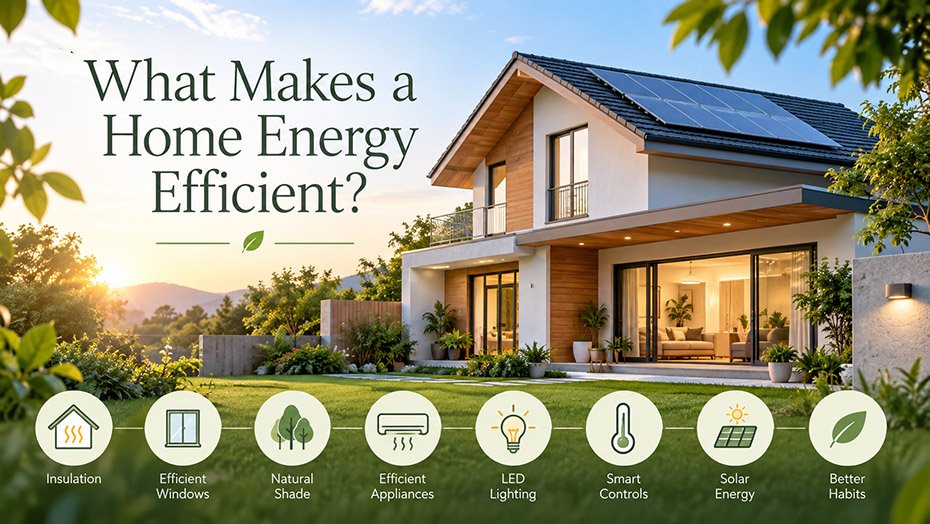
An energy-efficient home is not simply a house with solar panels on the roof. It is a home designed and operated to use less energy while maintaining comfort, good lighting, healthy indoor air, and reliable performance.
From insulation and windows to appliances, lighting, ventilation, and everyday habits, many small improvements can work together to reduce unnecessary energy consumption. In India and other warm climates, controlling heat entering the home and reducing cooling demand can be especially important. India’s Bureau of Energy Efficiency notes that buildings account for more than a third of the country’s electrical energy use, with lighting, heating, and cooling among the major demands. (Bee India)
So, what actually makes a home energy efficient?


1. Good Insulation Keeps Energy From Escaping
One of the foundations of an energy-efficient home is a well-insulated building envelope.
Insulation helps slow the movement of heat through the roof, walls, and other parts of the building. During hot weather, good insulation can help reduce the amount of outdoor heat entering the living space. In cooler conditions, it can help keep indoor warmth from escaping.
However, insulation works best as part of a complete system. Gaps, poorly sealed openings, and areas around doors or windows can reduce its effectiveness.
For existing homes, checking the roof, ceiling, walls, and other areas where heat transfer occurs can reveal opportunities for improvement.
2. Windows and Doors Should Control Heat and Air Leakage
Windows provide daylight and ventilation, but they can also be a major pathway for unwanted heat gain or loss.
Energy-efficient windows can use features such as multiple glazing layers, low-emissivity coatings, insulated frames, and improved seals. The Department of Energy explains that window performance depends on factors including U-factor, solar heat gain coefficient, glazing, frames, and air leakage. (The Department of Energy’s Energy.gov)
In warm climates, controlling solar heat entering through windows is particularly important. External shading, curtains, blinds, overhangs, and appropriately selected glazing can all help manage sunlight and indoor temperatures.
Doors also matter. Weatherstripping and sealing gaps around doors can reduce unwanted air movement.
3. Natural Shade Can Reduce Cooling Demand
A home does not always need technology to become more efficient.
Trees, balconies, roof overhangs, shading structures, and strategically placed landscaping can reduce direct sunlight reaching walls and windows. This can help keep indoor spaces cooler and potentially reduce the workload on air-conditioning systems.
Building orientation and surrounding conditions also influence how much sunlight and heat a home receives. The Bureau of Energy Efficiency highlights the importance of a building’s location and surroundings in regulating temperature and illumination. (Bee India)


4. Efficient Cooling and Heating Systems Matter
Heating and cooling can represent a significant portion of household energy use.
An efficient air conditioner, heat pump, fan, or heating system can provide the required comfort while using less electricity than an inefficient or poorly maintained system.
But equipment efficiency is only part of the equation. A system that is too large, incorrectly installed, poorly maintained, or operating in a poorly insulated home may not deliver the expected performance.
Regular filter cleaning, maintenance, proper sizing, and appropriate temperature settings can help systems operate more efficiently.
5. Efficient Appliances Reduce Everyday Electricity Use
Refrigerators, washing machines, dishwashers, water heaters, televisions, computers, and other appliances all contribute to household electricity consumption.
When replacing an appliance, look beyond its purchase price. Its energy consumption over many years can have a substantial effect on its overall operating cost.
Energy-efficiency labels and ratings can help consumers compare products based on their expected energy performance. Efficient appliances are particularly useful when they are used frequently or operate for long periods.


6. LED Lighting and Natural Daylight Make a Difference
Lighting is another area where efficiency improvements can be relatively simple.
LED bulbs generally use considerably less electricity than traditional incandescent lighting and can provide long operating life. Using efficient lighting throughout a home can therefore reduce electricity consumption.
Natural daylight can also reduce the need for artificial lighting during the daytime. Well-positioned windows, skylights, light-colored interior surfaces, and thoughtful room layouts can help make better use of available daylight.
The goal is not simply to install more lights, but to provide the right amount of light where and when it is needed.
7. Smart Controls Help Prevent Energy Waste
Technology can help homeowners understand and manage energy use.
Smart thermostats, timers, occupancy sensors, smart plugs, and energy-monitoring devices can provide information about when and where electricity is being consumed.
For example, a smart control can automatically adjust temperature settings according to schedules or occupancy. Energy monitors can reveal appliances or systems that consume more electricity than expected.


8. Ventilation Should Be Efficient Too
An energy-efficient home still needs fresh air.
Good ventilation helps manage indoor air quality, moisture, odors, and pollutants. However, uncontrolled air leakage can waste energy, particularly when conditioned air escapes through gaps and cracks.
The U.S. Department of Energy describes whole-house weatherization as an approach that considers the building envelope, heating and cooling equipment, electrical systems, and appliances together rather than treating each component separately. (The Department of Energy’s Energy.gov)
This whole-home approach is important because different improvements influence one another.
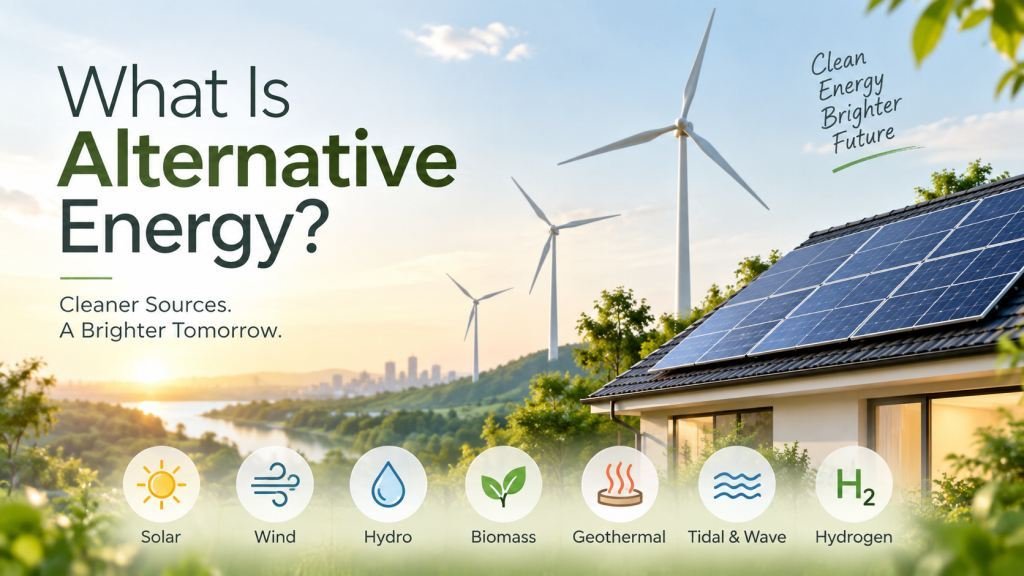
9. Solar Energy Can Offset Electricity Use
Solar panels can generate electricity from sunlight and reduce the amount of electricity a household needs to obtain from the grid.
However, solar generation and energy efficiency are different concepts. Solar produces energy, while efficiency reduces the amount of energy required.
A home that combines reduced energy demand with renewable generation can potentially move toward a much lower overall grid-energy requirement.
10. Everyday Habits Complete the Picture
Even an efficient home can waste energy through everyday behavior.
Leaving lights on unnecessarily, running appliances when they are not needed, setting cooling systems excessively low, ignoring maintenance, or leaving electronics consuming standby power can all add to household energy use.
Simple habits such as switching off unused equipment, using natural ventilation when conditions permit, maintaining appliances, and monitoring electricity consumption can complement physical improvements.
A More Efficient Home Is a Complete System
The most energy-efficient home is not defined by one particular product or technology. Insulation, windows, shading, ventilation, appliances, lighting, cooling systems, smart controls, and renewable energy can all contribute.
The best starting point is usually to understand where energy is being consumed or lost. From there, homeowners can prioritize improvements based on their climate, building design, budget, and lifestyle.
Energy efficiency is ultimately about using energy thoughtfully: getting the comfort and functionality you need while reducing unnecessary consumption.
Quick checklist:
- ✓ Improve insulation where appropriate
- ✓ Seal unnecessary air leaks
- ✓ Use efficient windows and shading
- ✓ Choose efficient cooling and heating equipment
- ✓ Upgrade frequently used appliances
- ✓ Use LED lighting
- ✓ Make better use of daylight
- ✓ Maintain ventilation systems
- ✓ Monitor household electricity consumption
- ✓ Consider renewable energy such as rooftop solar
A home does not have to be completely redesigned overnight. Even a series of practical improvements can gradually make a home more comfortable, more efficient, and less wasteful.