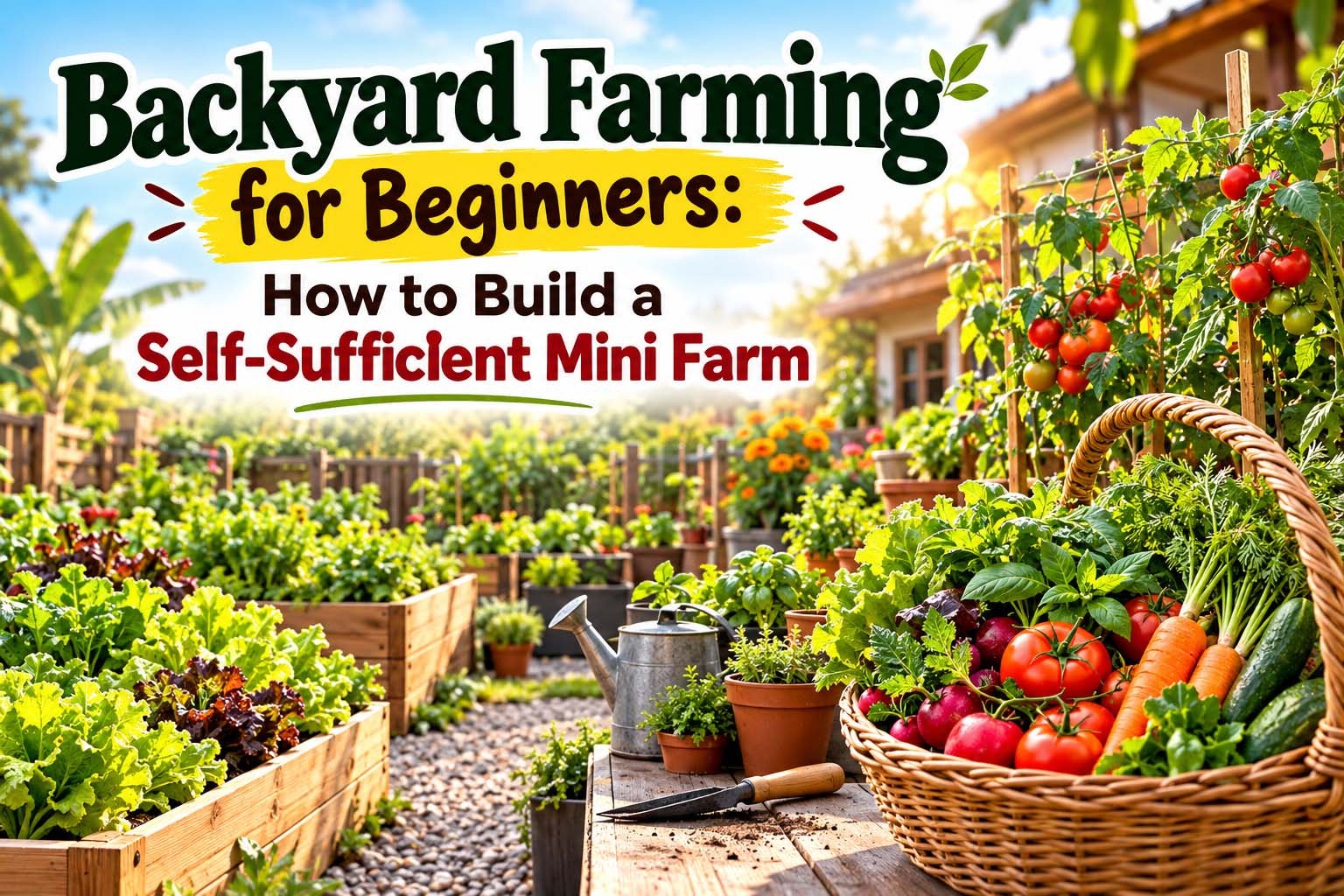
Backyard farming is becoming an increasingly practical way to grow fresh food at home. You don’t need acres of farmland or expensive equipment to get started. With a small backyard, patio, terrace, or even a collection of containers, you can create a productive mini farm that supplies vegetables, herbs, fruits, and other useful foods.
A self-sufficient mini farm doesn’t mean producing everything you eat. Instead, the goal is to grow a meaningful portion of your own food while reducing waste, making better use of available space, and becoming less dependent on grocery-store produce.


1. Start by Planning Your Available Space
Before buying seeds or building garden beds, look carefully at the space you have available. A successful backyard farm begins with good planning.
Observe how much sunlight different areas receive throughout the day. Most vegetables need around 6–8 hours of sunlight, although leafy greens and some herbs can tolerate partial shade.
Think about water access, drainage, walking space, and protection from strong winds. If your space is limited, don’t worry. Containers, grow bags, vertical gardens, and raised beds can allow you to grow a surprising amount of food in a small area.
Start small rather than trying to transform your entire backyard at once.
2. Choose Crops That Are Easy to Grow
Beginners should choose vegetables and herbs that are relatively easy to grow and provide useful harvests.
Good options include tomatoes, lettuce, spinach, radishes, beans, cucumbers, chilies, carrots, basil, coriander, mint, and other herbs suitable for your climate.
Fast-growing crops such as radishes, leafy greens, and herbs can provide encouragement because you don’t have to wait months for your first harvest.
Choose crops that your household actually eats. Growing vegetables you regularly use makes your mini farm more practical and reduces food waste.


3. Use Raised Beds, Containers, and Grow Bags
You don’t necessarily need traditional garden soil.
Raised beds are useful because they allow you to control the soil quality and organize crops efficiently. Containers and grow bags are especially useful for patios, balconies, rooftops, and small yards.
Use containers with adequate drainage holes. Different plants require different amounts of root space, so select container sizes accordingly.
Vertical gardening is another excellent option. Trellises can allow climbing plants such as beans, cucumbers, and some varieties of tomatoes to grow upward instead of taking valuable ground space.
4. Build Healthy Soil
Healthy soil is the foundation of a productive mini farm. Even excellent seeds won’t perform well if the soil lacks nutrients or drains poorly.
You can improve garden soil by incorporating mature compost and other suitable organic matter. Compost made from appropriate kitchen and garden waste can also help turn household waste into something useful for your garden.
Avoid planting everything in the same spot year after year. Crop rotation and maintaining soil health can help reduce certain pest and disease problems.


5. Grow a Mix of Vegetables and Herbs
A productive mini farm should contain several types of crops rather than relying on only one vegetable.
For example, you could combine tomatoes with basil, lettuce with radishes, or beans with leafy greens. Herbs are particularly useful because they require relatively little space and can add flavor to everyday meals.
Consider planting crops at different times rather than putting all your seeds in the ground on the same day. This can create a more continuous harvest.
Succession planting—replanting a crop after harvesting an earlier batch—can help you make better use of limited space.
6. Add Fruit Plants Where Space Allows
Once your vegetable garden is established, consider adding fruit-producing plants.
Depending on your climate and available space, options might include strawberries, lemons, guavas, papayas, bananas, berries, or compact fruit varieties.
Some fruit plants can grow successfully in large containers, while others need considerably more room. Research the mature size of a plant before adding it to your mini farm.
Fruit trees require patience, but established plants can provide harvests for many years.


7. Consider Keeping a Few Chickens
If local regulations, space, and your lifestyle allow it, a small backyard flock can become another part of a mini-farm system.
Chickens can provide fresh eggs and manure that can eventually become a useful component of properly managed compost.
However, chickens require daily care, clean water, appropriate feed, secure housing, and protection from predators. They should only be added if you can provide proper care and if keeping poultry is permitted where you live.
A self-sufficient garden should make life easier—not create responsibilities you cannot manage.
8. Use Natural Ways to Manage Pests
Pests are a normal part of gardening. Instead of immediately reaching for harsh chemicals, start with preventative methods.
Inspect plants regularly and remove damaged leaves when appropriate. Encourage beneficial insects by growing flowers alongside vegetables. Marigolds and other flowering plants can also add biodiversity to the garden.
Good spacing, healthy soil, appropriate watering, crop rotation, and removing diseased plant material can all contribute to healthier plants.
If you use any pest-control product, follow its label directions and make sure it is appropriate for edible crops.


9. Reduce Waste and Reuse Resources
One of the biggest advantages of a mini farm is the opportunity to create a more efficient household food system.
Kitchen scraps suitable for composting can become garden nutrients instead of going directly into the trash. Fallen leaves can also contribute to compost or mulch when properly managed.
Rainwater collection may be another option where legal and practical, although collected water should be used appropriately and safely.
You can also reuse suitable containers, save seeds from appropriate plants, and grow vegetables from kitchen leftovers where practical.
The more resources you can responsibly reuse, the less waste your household produces.
10. Harvest Regularly and Expand Gradually
Harvesting is one of the most rewarding parts of backyard farming.
Pick vegetables at the appropriate stage rather than allowing everything to become overripe. Regular harvesting can encourage some plants to continue producing.
Keep simple notes about what you planted, when you planted it, how much you harvested, and which varieties performed well. This information becomes extremely useful when planning your next growing season.
Don’t try to become completely self-sufficient immediately. Begin with a few vegetables, learn what works in your particular environment, and expand gradually.


A Practical Path Toward Self-Sufficiency
Building a self-sufficient mini farm is less about having a huge amount of land and more about using the space you have intelligently.
Start with a few productive crops. Improve your soil. Learn how much water and sunlight your plants need. Add containers, fruit plants, composting, or poultry only when you’re ready.
Over time, a small backyard can become a reliable source of fresh vegetables, herbs, fruits, and other useful resources. It can also provide something that is difficult to measure in dollars: the satisfaction of knowing where a portion of your food came from.
Start small, grow consistently, learn from each season, and let your mini farm develop naturally.